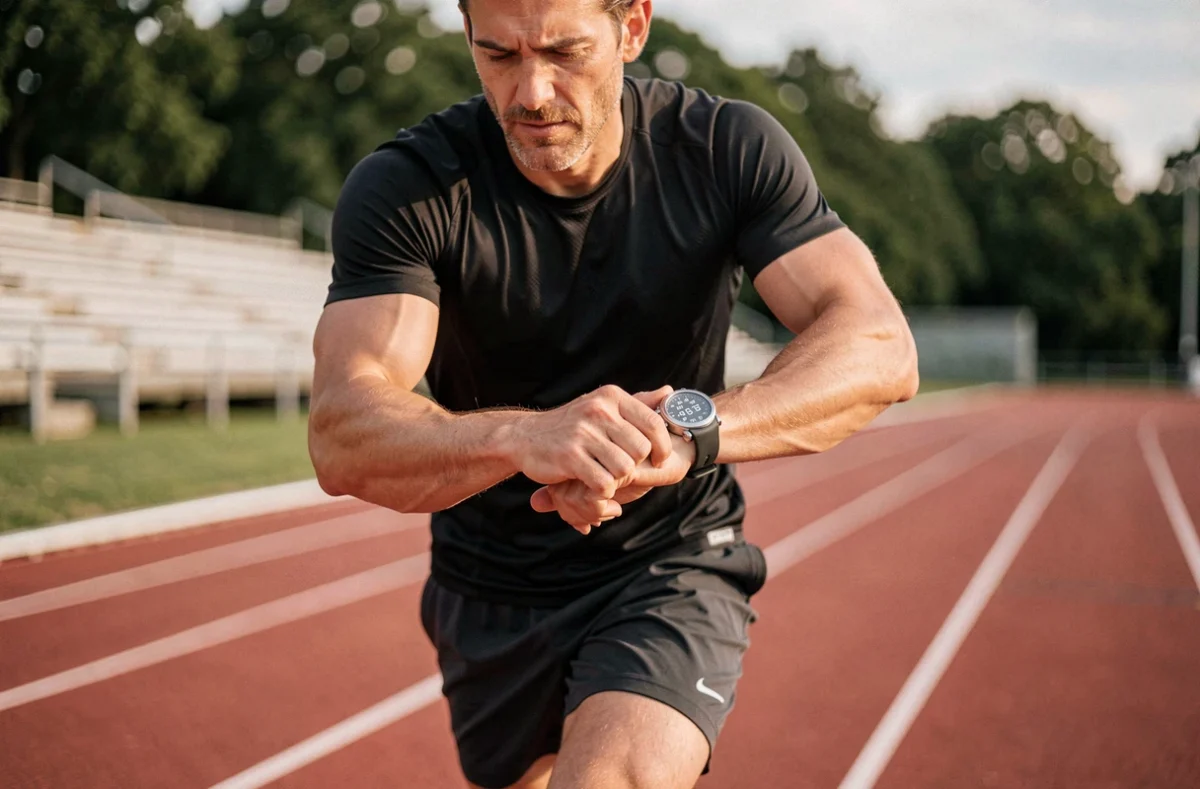
The sports stopwatch today encompasses very different realities: from the simple push-button on a digital watch to multiband GPS systems capable of calculating instantaneous pace. The choice depends less on budget than on the precision actually required for your practice.
A 10 km road runner and a mountain trail runner do not have the same constraints. The available data on sensor reliability shows that not all stopwatches are equal under all conditions.
GPS Accuracy and Timing: What Sports Watches Really Measure
The majority of current sports watches come equipped with a GPS receiver to calculate distance and pace. This data is often confused with timing itself, whereas they are two distinct measurements.
The time displayed by your watch remains reliable: a cheap quartz watch drifts by a few seconds per month, which is negligible for training. However, GPS distance varies depending on terrain and environment. In forests, dense urban areas, or rugged terrain, trace errors can significantly distort the average pace displayed.
For official competition results, chip timing remains the approved standard. Choosing the best sports stopwatch for training thus involves identifying what level of GPS accuracy your practice truly requires, rather than seeking the most accurate time to the hundredth.
Dual Frequency GPS and Multiband: A Real Gain Under Certain Conditions
Multiband systems, combining several satellite constellations, represent the most significant technical evolution in recent years. The principle: to capture signals on two distinct frequencies to reduce bounce and signal loss.
The gain is especially noticeable in degraded conditions: trails under forest cover, urban canyons between buildings, narrow valleys. On a track or clear road, the difference with a single frequency GPS often remains marginal.
The downside of this technology concerns battery life. Multiband modes consume significantly more energy. A manufacturer that advertises maximum battery life in basic GPS mode may see this duration drop by half or more in dual frequency mode. Battery life should be assessed according to the chosen accuracy mode, not according to the maximum promise.
Assessing Your Real Needs Before Paying the Extra Cost
If you primarily run on roads or tracks, investing in a multiband model offers little benefit. Conversely, for mountain trail running or long outings in the forest, the continuity of the GPS trace becomes a factor of comfort and reliability for performance tracking.
Wrist Heart Rate and Intervals: The Limits to Know
Most sports watches integrate an optical heart rate sensor at the wrist. For trend monitoring during long and regular sessions, the measurement is sufficient. Field reports diverge on this point as soon as the intensity varies rapidly.
During short intervals, the wrist sensor has a latency that can delay the reading by several seconds compared to physiological reality. The gap widens particularly during intense intervals, where heart rate rises and falls abruptly.
To precisely manage interval sessions, a chest strap remains the most reliable device. The optical sensor is more suitable for monitoring in fundamental endurance or controlling broad heart rate zones.
- Endurance and long outings: the wrist sensor offers acceptable accuracy for most practitioners.
- Intervals and HIIT: a chest strap reduces latency and reading discrepancies during rapid intensity changes.
- Cross-training and weightlifting: wrist movements often disrupt the optical signal, making the measurement less usable.
Button Responsiveness and Ergonomics: An Underestimated Practical Criterion
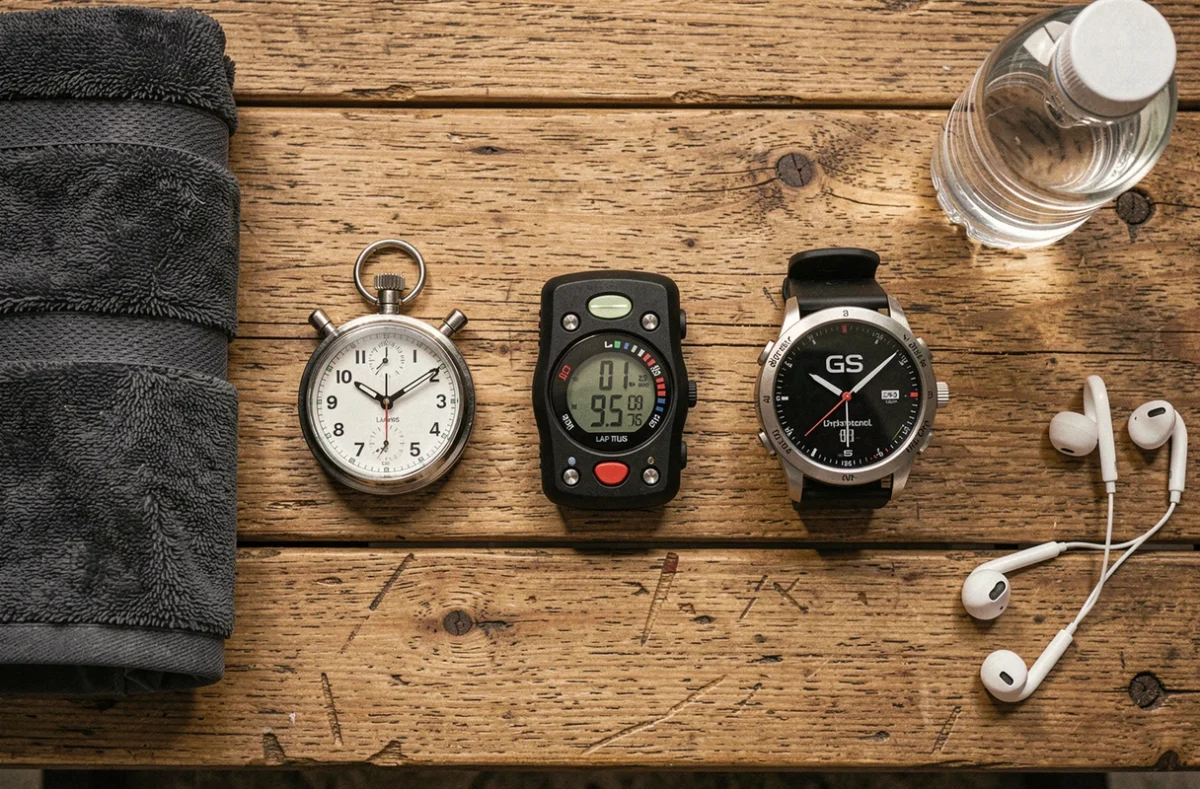
A sports stopwatch primarily serves to mark intermediate times. The responsiveness of the “lap” button may seem trivial, but it directly affects the quality of the data collected.
Recent tests on certain trail watches have highlighted a noticeable delay after pressing, sufficient to skew the first seconds of an interval. Over a 200-meter series, this delay can represent a significant portion of the total time and render the displayed average pace less relevant.
A physical button with a clear tactile feedback is preferable to a touchscreen for marking a lap during intense effort. Gloves, sweat, rain: the real-life conditions of use degrade the reliability of touchscreens. Checking this point in-store or during a field test avoids recurring frustrations.
Training Data and Applications: Choosing a Coherent Ecosystem
The stopwatch no longer functions alone. The collected data (time, distance, heart rate, pace per lap) is transferred to a mobile app or web platform for analysis.
- Compatibility with third-party platforms: some manufacturers lock data export, complicating the transition from one brand to another.
- Depth of analysis: apps vary greatly in handling intervals, displaying heart rate zones, and programming structured sessions.
- Automatic synchronization: the smooth transfer between watch and phone prevents data loss and manual handling after each session.
The associated app weighs as much as the hardware in the daily experience. A high-performing stopwatch coupled with limited software reduces the ability to utilize the collected data. Checking the app’s quality before purchase, by consulting user feedback on stores, provides a more reliable indication than the manufacturer’s technical sheets.
The choice of a sports stopwatch hinges on three concrete axes: the GPS accuracy suited to your usual terrain, the reliability of the heart rate sensor for your type of session, and the quality of the software ecosystem in which your data will be utilized. A simple and well-mastered model often provides more than a device overloaded with rarely used functions.