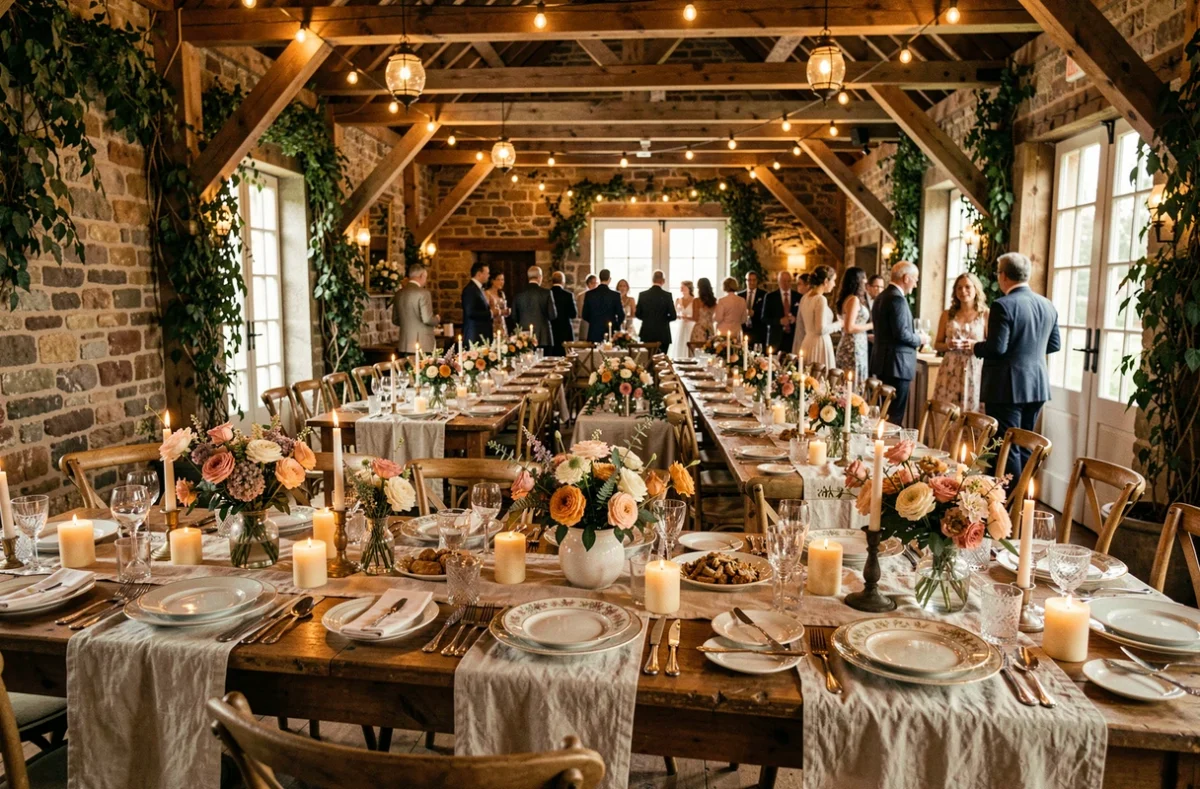
Wedding decoration today involves much broader aspects than just floral arrangements or the choice of a table runner. Industry professionals are observing a shift towards comprehensive staging, where lighting, the seasonality of plants, and the reuse of elements are as important as pure aesthetics. Here are ten concrete ideas to inspire your thinking and guide your wedding decoration choices this year.
1. Light scenography instead of massive decor
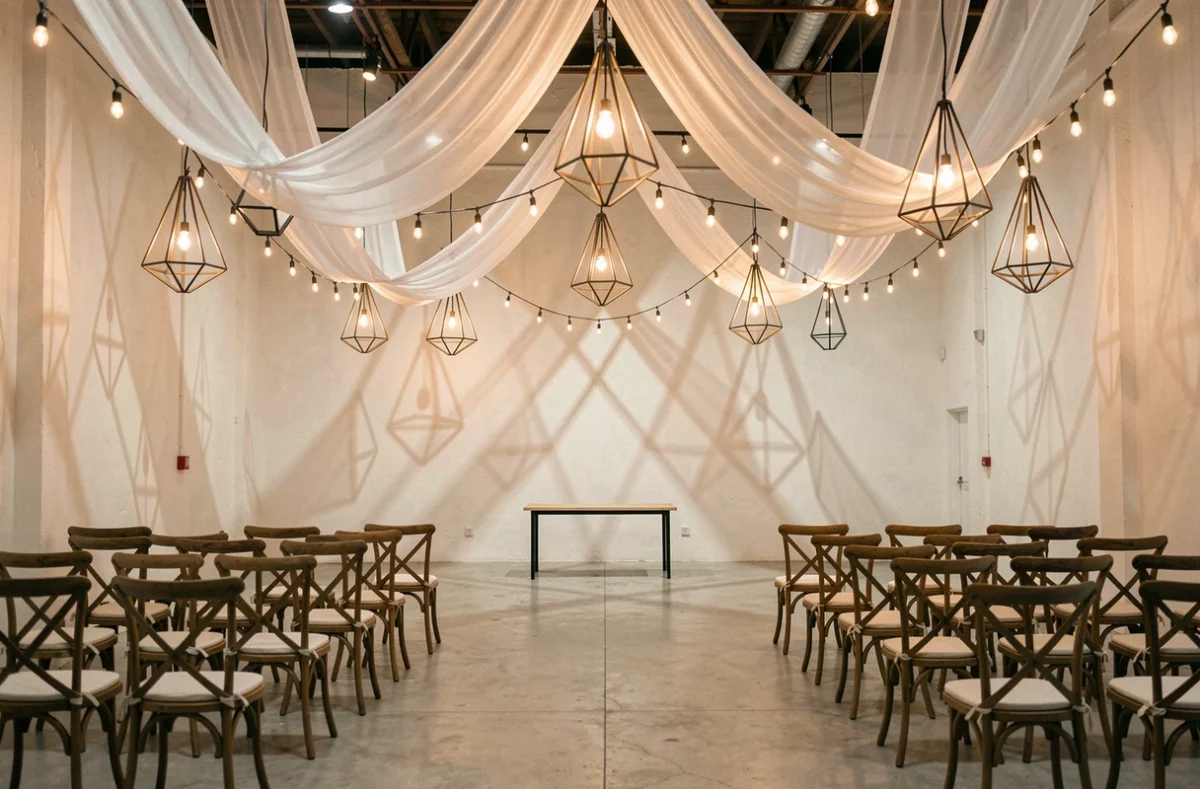
Multiplying decorative objects is not the only way to dress a room. Working with light as a full-fledged decorative material transforms the atmosphere without cluttering the space.
This approach relies on several indirect light sources: garlands hung at varying heights, candles grouped on mirrors, spotlights directed at floral arrangements or the ceremony arch. The principle is to create relief through light rather than accumulation. To explore decor on Tomy Mariage, you will find elements that lend themselves well to this type of staging.
2. Seasonal flowers with reuse from ceremony to reception
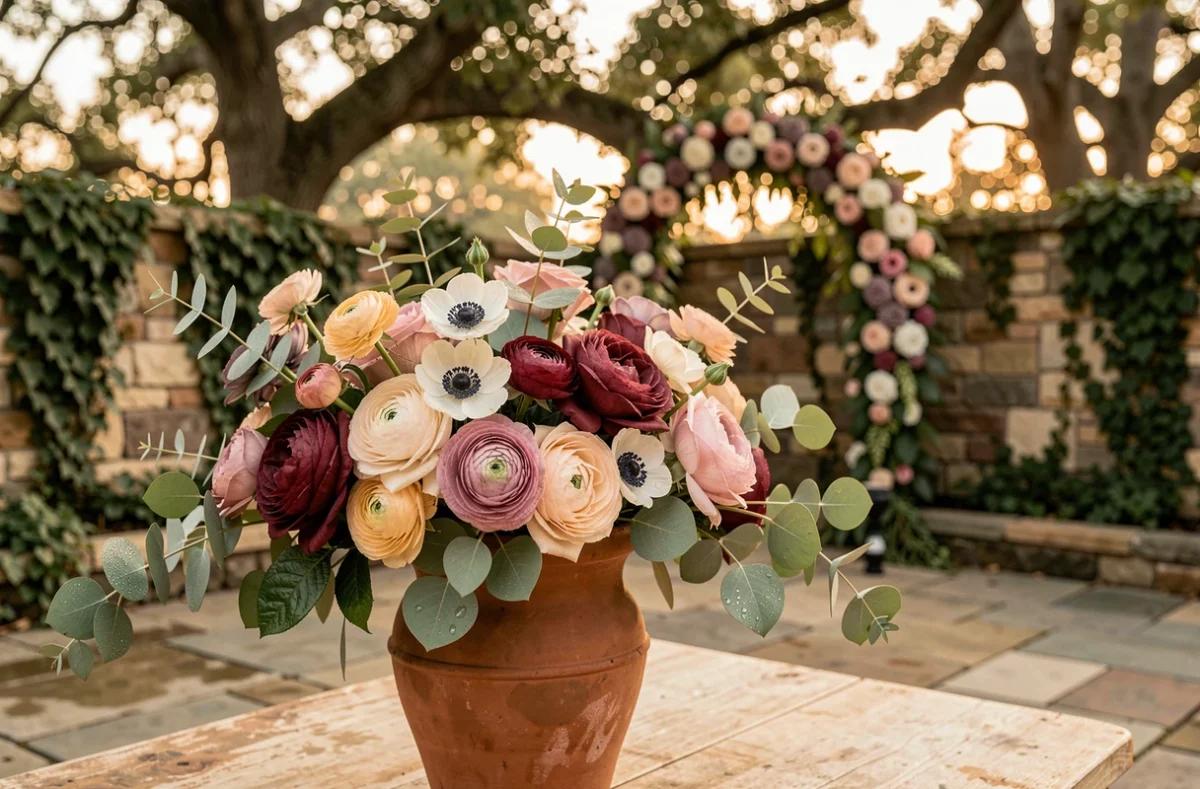
Choosing flowers that are locally available on the wedding date reduces transportation costs and ensures suitable freshness. Some florists offer to design the ceremony arrangements so that they can be moved to the reception tables afterward.
Reusing floral arrangements between the ceremony and reception avoids waste and lightens the budget. Another option is to offer the arrangements in reusable pots to guests at the end of the evening, extending the lifespan of the plants.
3. Color palette beyond green and white
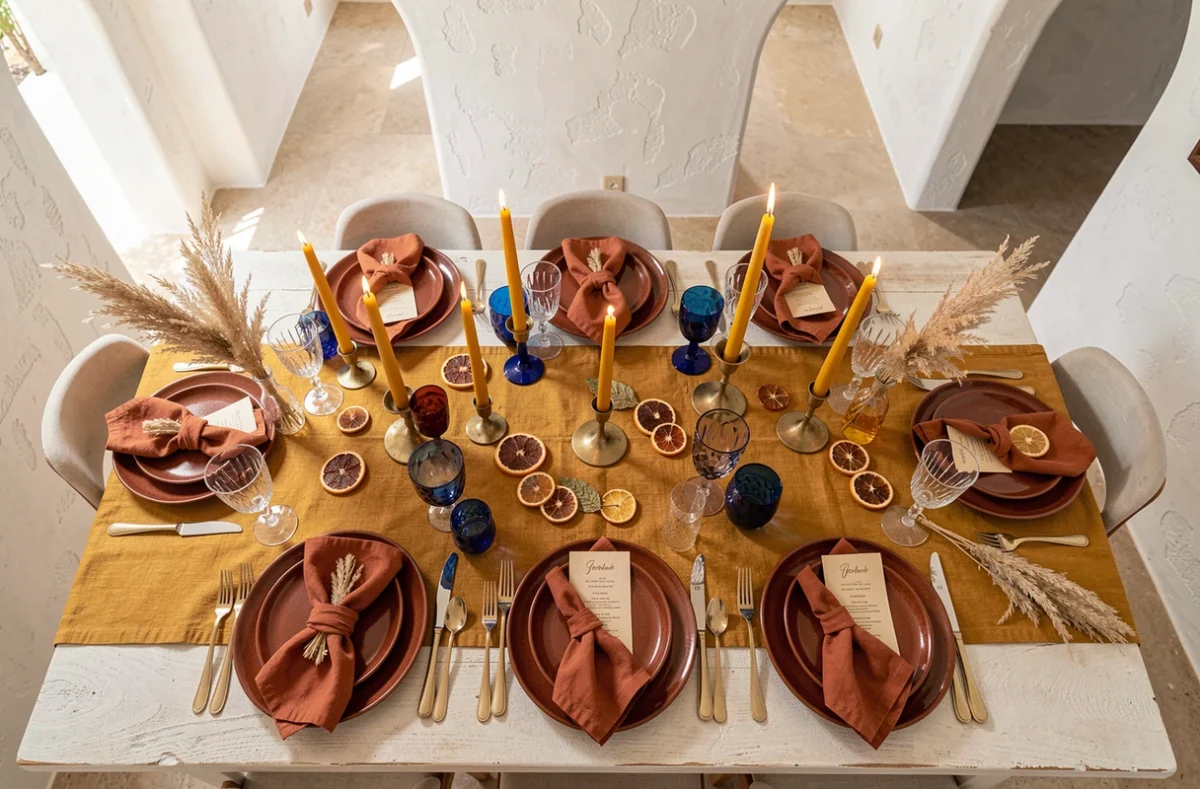
The green and white duo remains a classic, but professionals in Dordogne report a growing demand for bolder palettes. Terracotta, paprika red, saffron yellow, or lavender allow for a personalized atmosphere and move away from a too-neutral register.
The combination of warm shades with raw materials (linen, wood, ceramics) yields coherent results without tipping into excess. The color palette benefits from being limited to three dominant shades to maintain harmony throughout the room.
4. Autumn or winter wedding decoration
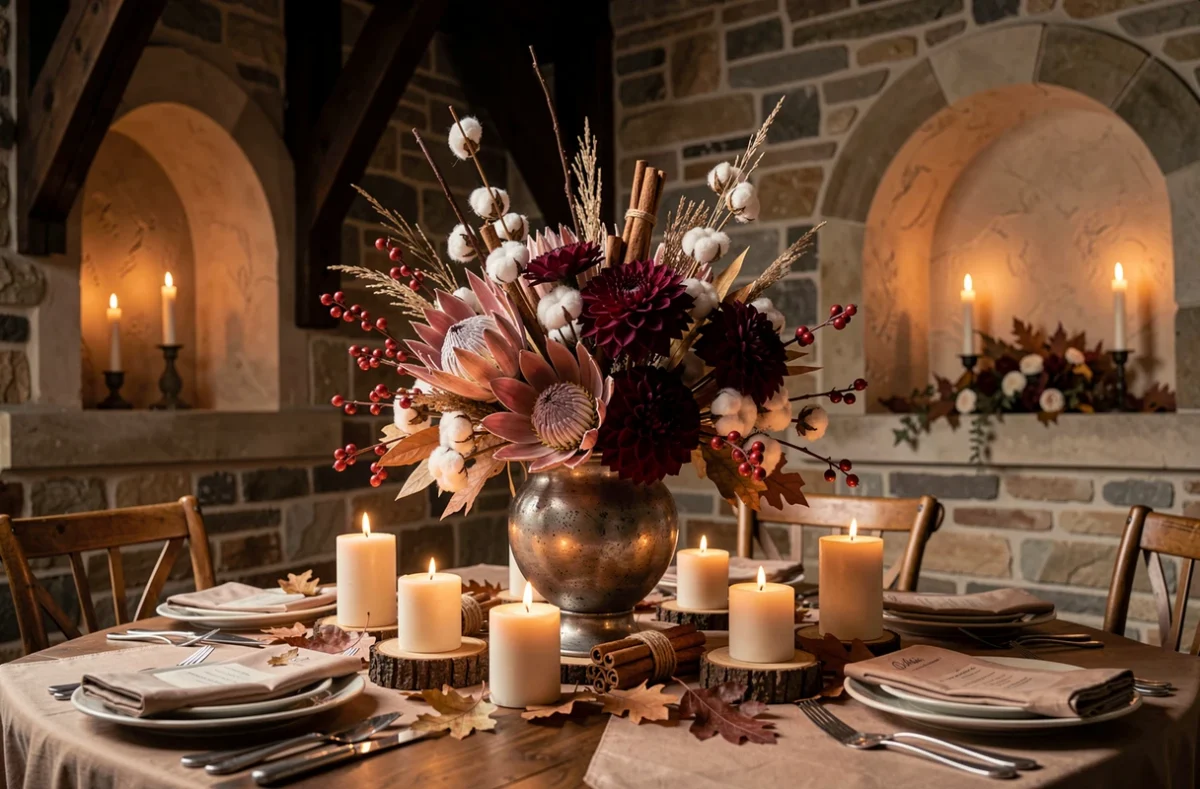
Unions now extend beyond summer. Professionals in Dordogne report that weddings are taking place as late as October, and winter celebrations are gaining traction.
Autumn offers a rich decorative repertoire: foliage in copper tones, ornamental pumpkins, abundant candles. Winter lends itself to enveloping decorations with thick fabrics, conifer branches, and warm lighting that compensates for reduced natural light. Adapting the decoration to the actual season of the wedding produces a more authentic result than forcing a summer theme in November.
5. Table runner in raw materials
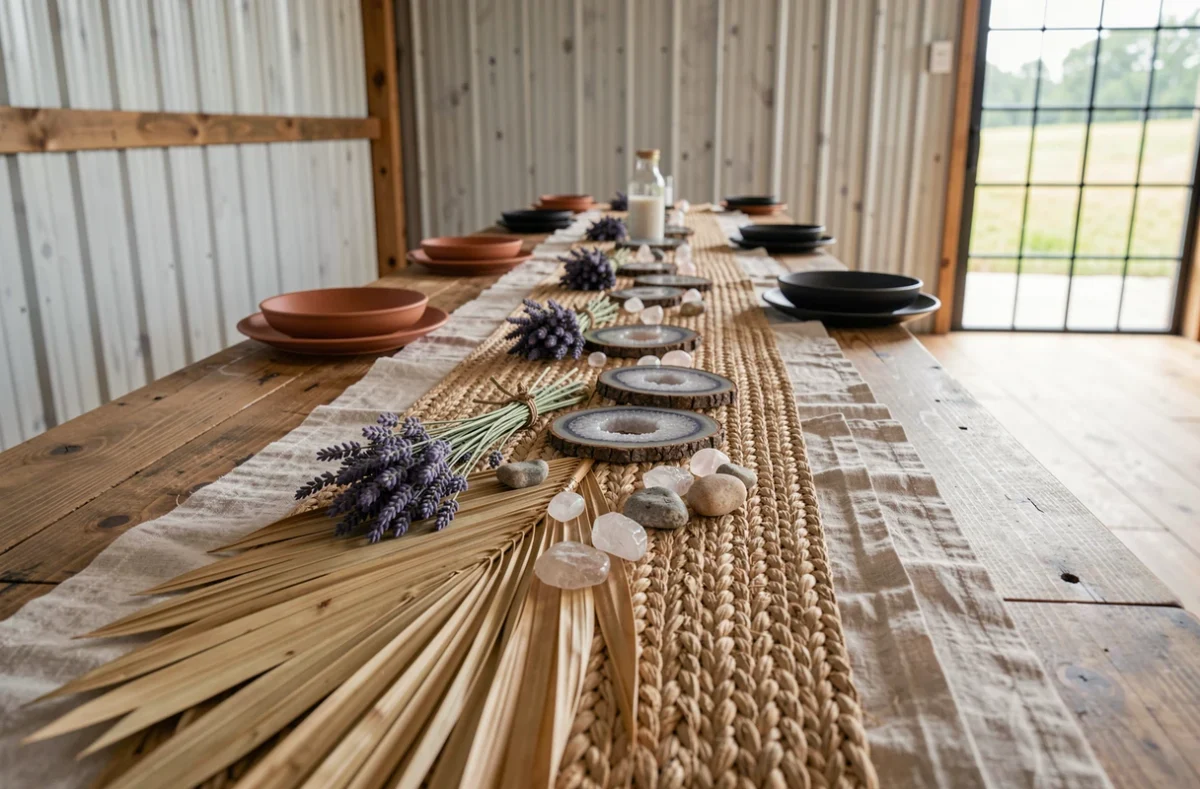
Replacing the traditional synthetic fabric table runner with a strip of raw linen, jute, or cotton gauze changes the visual texture of the table. These materials absorb candlelight well and pair with most styles.
A table runner made of natural material also serves as a base for placing plant elements directly on it: eucalyptus branches, small stones, seasonal fruits. The runner becomes a composition support rather than just a textile.
6. Plant-based seating plan
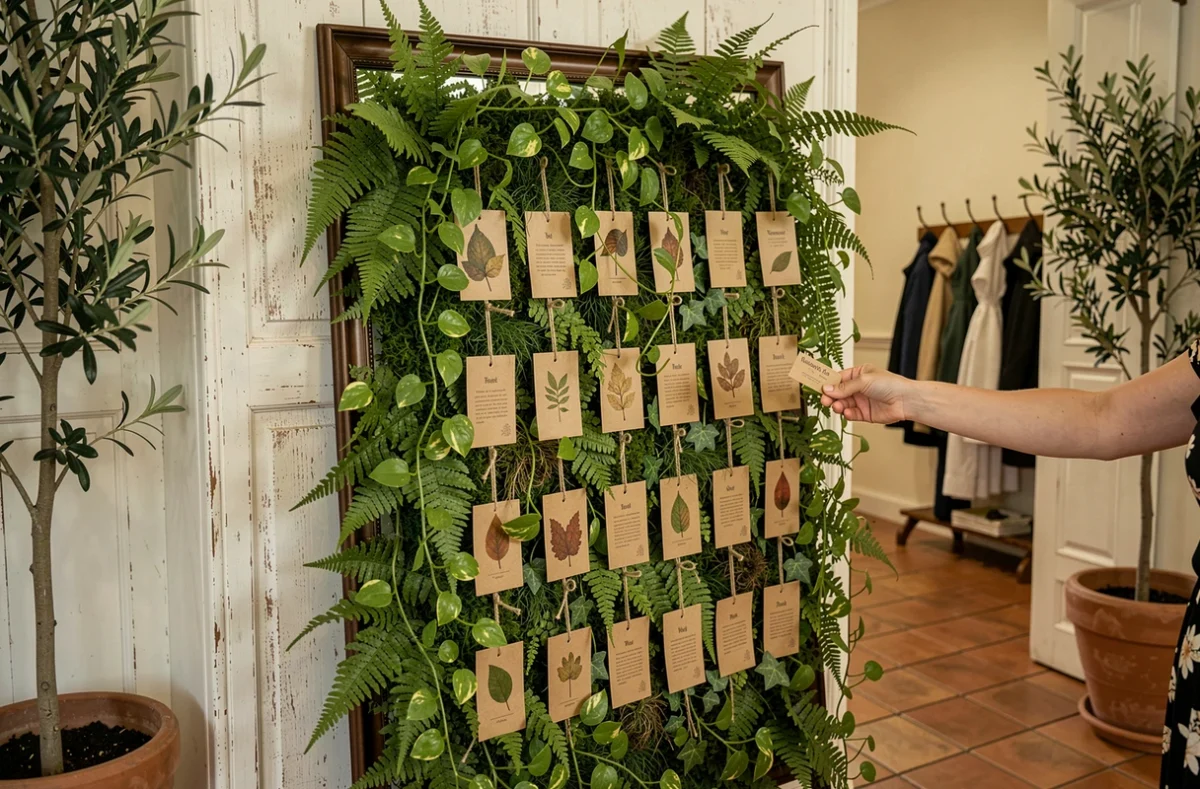
The seating plan is a functional element that most guests consult upon arrival. Making it a decorative object in its own right adds a touch of originality without massive additional effort.
Attaching place cards to tree branches arranged in a large vase, or suspending them from a wooden frame adorned with foliage, transforms a utilitarian panel into a centerpiece of the reception area. This idea works particularly well in a nature or bohemian theme.
7. Ceremony arch reused as a photobooth backdrop
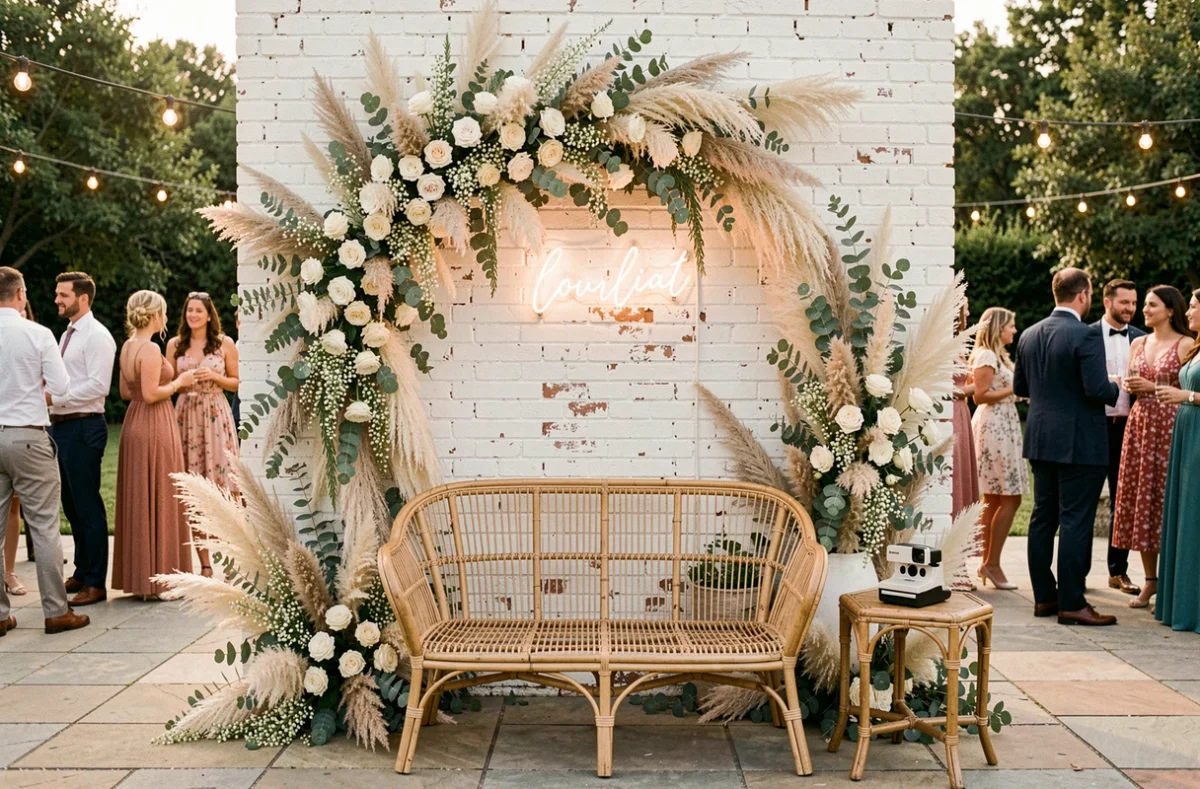
Building an arch for the ceremony and then dismantling it represents an investment in time and budget. Moving it after the vows to a corner of the reception hall to serve as a backdrop for the photobooth gives it a second function.
This principle of dual use of structural elements also applies to fabric panels or floral frames. The same element serves two roles throughout the day, reducing the total volume of decoration required.
8. Seasonal fruits and vegetables as centerpieces
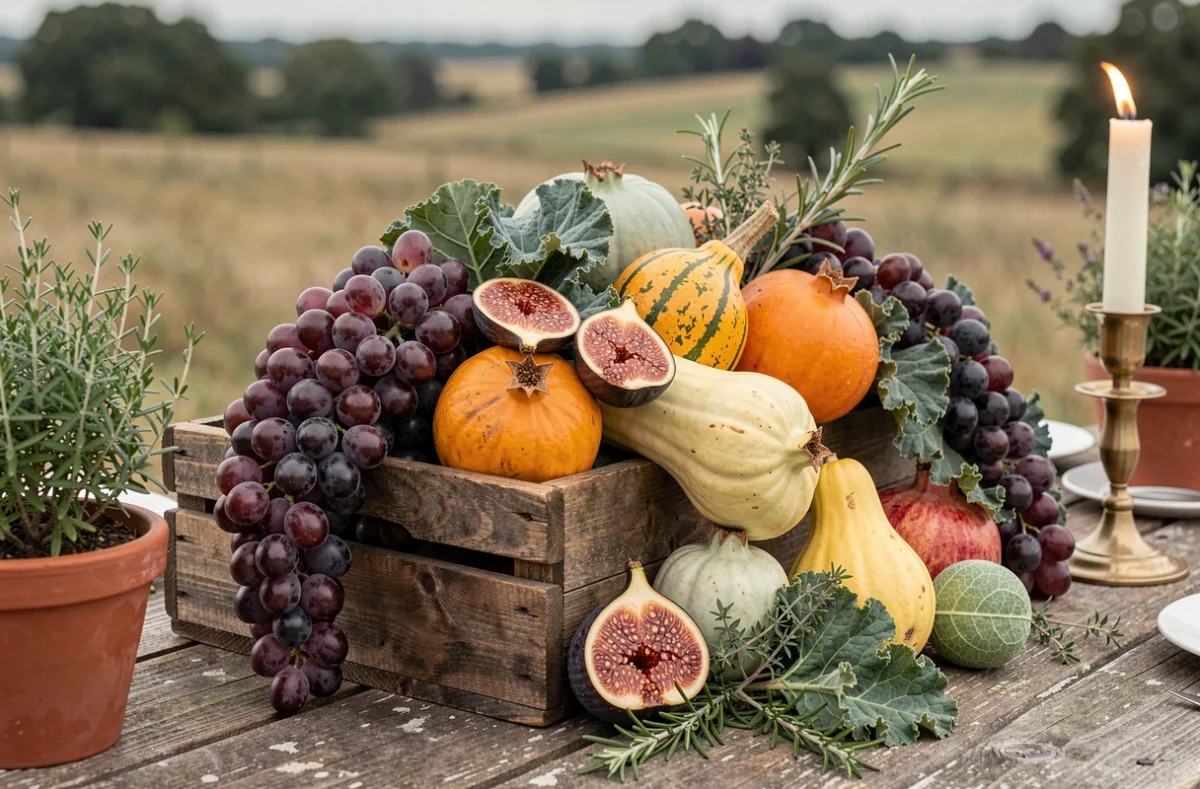
Pomegranates, figs, grapes, citrus fruits, or small pumpkins can advantageously replace traditional floral arrangements at the center of tables. The result is colorful, textured, and edible.
This option works well for autumn-winter weddings. The fruits can be arranged on a wooden platter, mixed with a few sprigs of rosemary or thyme. The cost remains moderate compared to traditional floral arrangements, and the setup does not require the intervention of a florist.
9. Scent space with artisanal candles
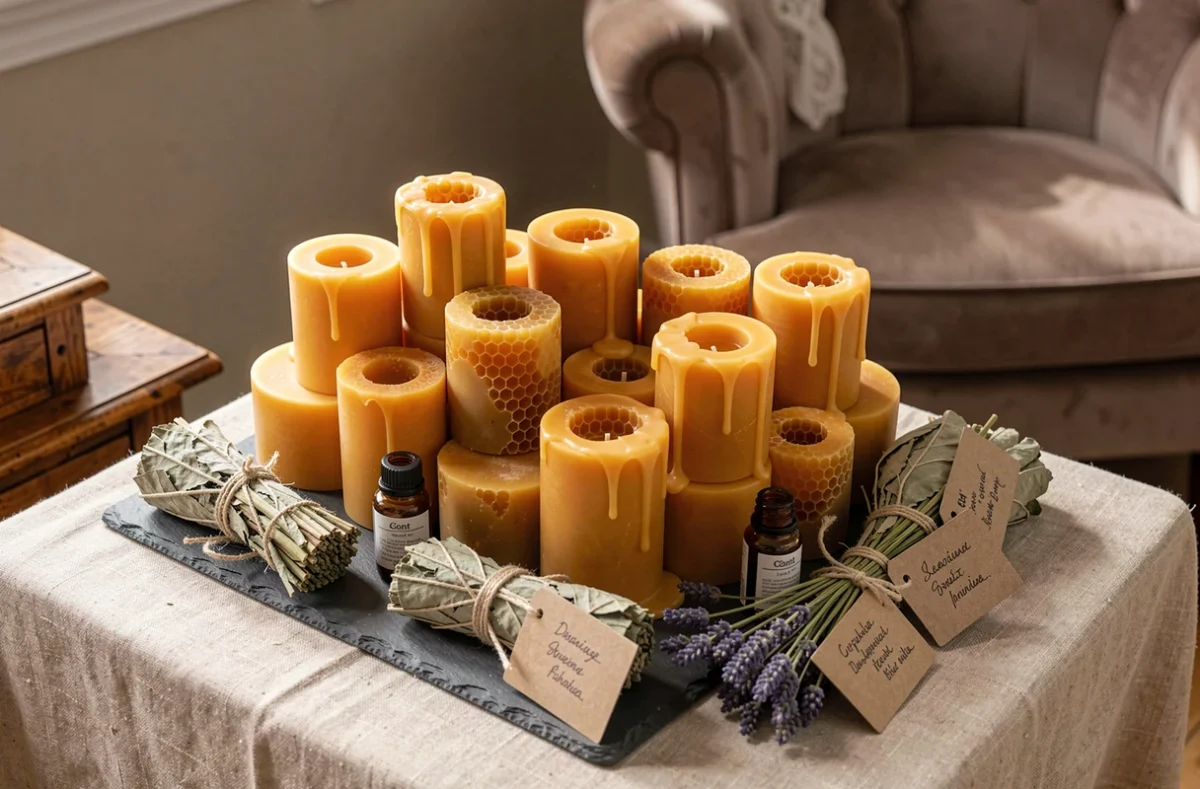
Wedding decoration also engages the senses beyond the visual. Grouping artisanal scented candles at strategic points (entrance of the hall, bar, couple’s table) creates an olfactory signature linked to the event.
Associating a specific scent with a particular location at the reception helps guests orient themselves and adds a sensory layer to the scenography. Choosing plant-based waxes and cotton wicks aligns with a coherent approach to natural materials.
10. Mismatched thrifted tableware
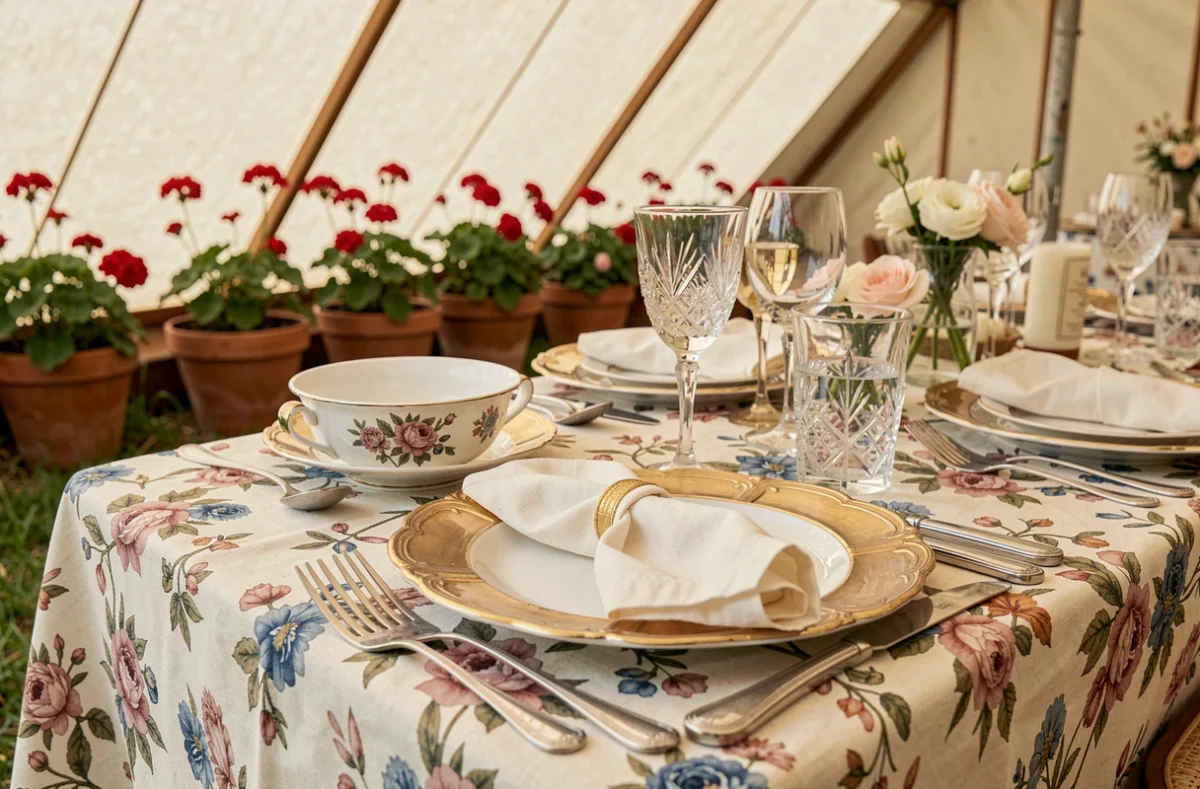
Assembling plates, glasses, and cutlery of different styles, found at flea markets or recycling centers, gives the tables a unique character. Each piece tells a micro-story, and the overall effect creates a rich visual without resorting to additional decoration.
Mismatched tableware works particularly well with a vintage or rustic theme. The main constraint remains logistics: it is necessary to plan enough pieces for all guests and anticipate breakage. Starting the collection several months before the wedding allows time to create a harmonious set despite the diversity of sources.
Each of these ideas can adapt to very different budgets and reception venues. The common thread remains the same: start from a defined theme and colors, then choose a few ideas to develop rather than accumulating unrelated elements. The most successful wedding decoration is the one that reflects a deliberate choice, not a compilation of trends.