A wedding takes several months to plan, sometimes more than a year. Between choosing the venue, drawing up the guest list and finding the dress, every decision leads to another. Accessories often come last, when the budget has already taken a hit and energy is running low. That’s precisely when mistakes can be most costly, because a poorly matched veil or a flimsy reception accessory stands out just as much as beautiful decorations.
Wedding accessories: put comfort before appearance
Have you ever worn a new pair of shoes for eight hours straight? That’s exactly what the bride faces on her wedding day. An accessory can look stunning in photos but become a nightmare to wear.
Before confirming a purchase, ask yourself three simple questions. Does the accessory stay in place without constant adjustment? Is its weight comfortable enough to wear throughout the ceremony and reception? And, most importantly, does it work with your main outfit without causing friction or looking visually unbalanced?
Take a floral hair comb, for example. In the shop, it seems lightweight. After four hours of dancing, it slips, pulls at your hair and ends up in the maid of honour’s bag. The solution is to try it out properly, with your hair styled and while moving naturally. The same applies to the groom’s accessories, such as cufflinks or a pocket square, which should stay in place without getting in the way.
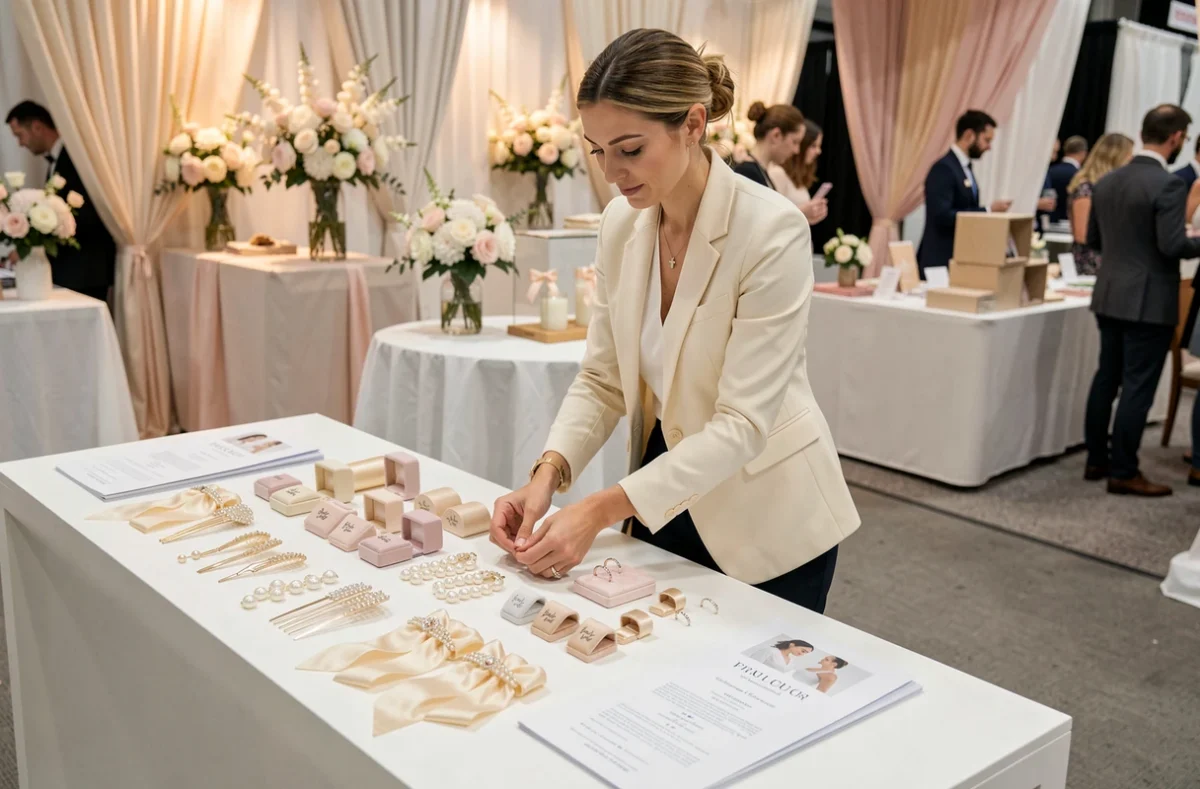
To find pieces that are both attractive and designed for extended wear, Univers Mariage’s online shop offers a catalogue that can be filtered by accessory type, making it easy to compare comfort details before placing an order.

Reception decorations: choose accessories that will last all day
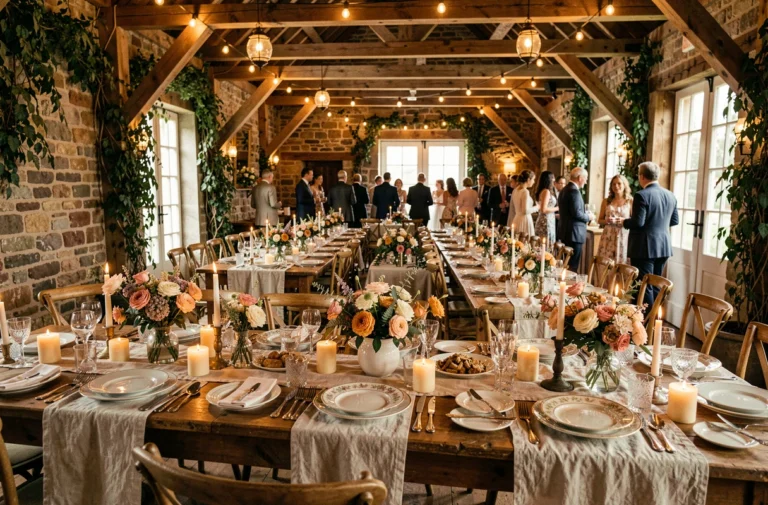
Table decorations account for a significant share of the accessories budget. Centrepieces, place cards, table runners, candle holders: the list grows quickly. A common pitfall is buying items online that look great on screen but turn out to be too thin, too small or too fragile once set up.
Materials and durability
A place card made from lightweight cardstock will warp if the reception is outdoors and humidity rises in the evening. A candle holder made from very thin glass could crack from the heat of a tea light. Checking the paper weight, thickness and heat resistance before buying can help you avoid last-minute replacements.
When ordering online, look for product listings that specify exact dimensions and materials. A description that says only “elegant” or “refined” without any technical details is a warning sign.
Reusing items and buying second-hand
One often-overlooked point: second-hand wedding items aren’t necessarily “used”. In France, the law prohibits the destruction of unsold non-food goods (Article L.541-15-8 of the Environmental Code). This means that new accessories from clearance stock are sold through alternative channels, sometimes at reduced prices.
Wedding resale groups, specialist platforms and dedicated clothing swaps can help you find pristine items for a fraction of their original price. It’s still important to be cautious, as there is no unified label guaranteeing the durability or origin of wedding accessories. Ask for detailed photos, proof of purchase and information about the materials.
Wedding accessory budget: which expenses to prioritise
Planning a wedding brings a cascade of small expenses. Accessories are often underestimated at first, then the costs creep up with successive additions. Here are the categories where careful budgeting matters most:
- Wearable accessories (veil, jewellery, shoes, cufflinks): these are the most visible in photos and the most demanding to wear. Investing in quality here has a direct impact on comfort and appearance.
- Ceremony accessories (ring cushion, order of service, petals): they’re used for just a few minutes. A simple, well-made item is more than enough; there’s no need to overdo the decorations.
- Reception accessories (table decorations, card box, guest book, wedding favours): this is the category with the most room for overspending. Setting a limit per table or per guest helps keep costs under control.
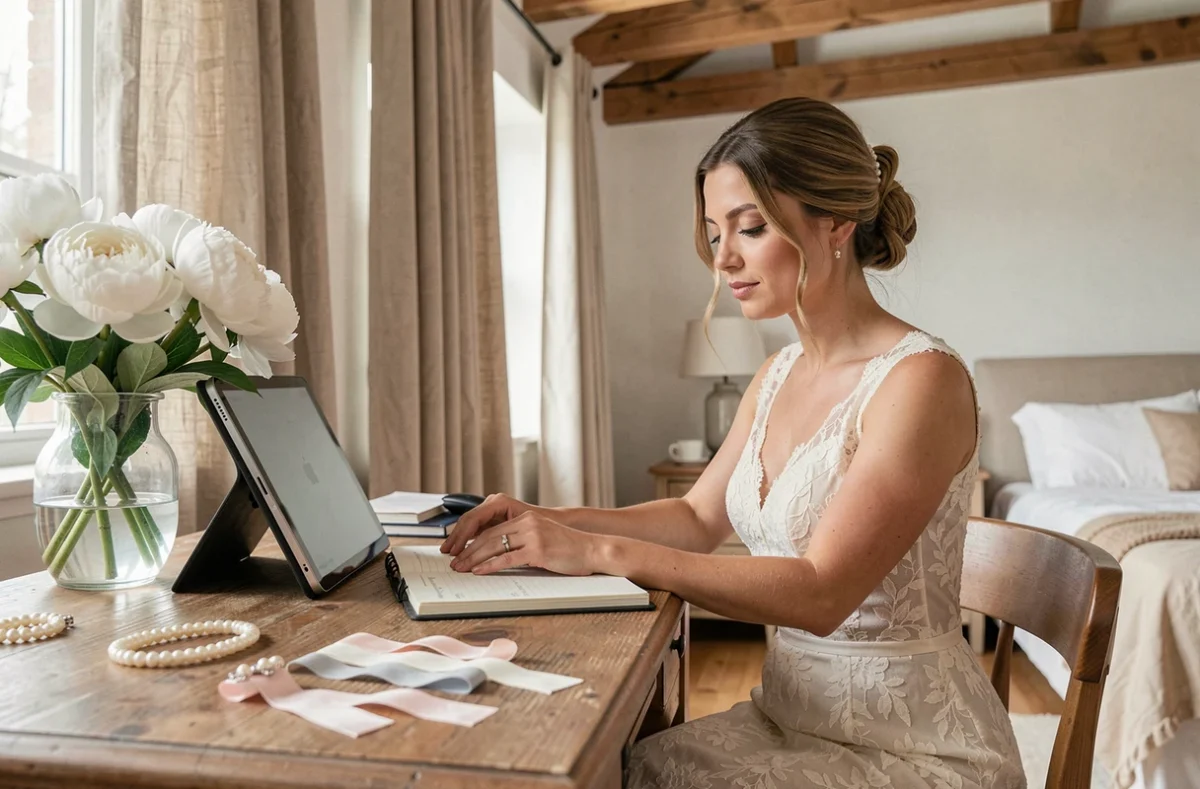
A shared spreadsheet between the two partners, updated with every purchase, is still the most reliable way to track these expenses. Online wedding planning tools often include budget tracking, but a simple shared file works just as well.
Online wedding advice: separate the useful from the noise
Searches for wedding planning advice produce thousands of results. Blogs, forums, social media and vendor websites all promote their own recommendations, which aren’t always impartial.
How reliable are the recommendations?
An article that recommends a vendor or accessory without disclosing a commercial relationship is less reliable than a detailed first-hand account. Look for reviews that describe real-world use: how long it was worn, how it held up after washing and how it looked in natural light. A detailed account is worth more than a five-star rating.
Keep track of ideas without getting overwhelmed
Instead of saving dozens of tabs, create a simple table with three columns: the item, the source link and your verdict (yes, no, needs checking). This approach filters out the noise and stops you revisiting the same site five times without making progress.
Wedding planning platforms offer pre-filled to-do lists. They’re useful as a starting point, but adapt them to your actual situation rather than following a generic template designed for a typical wedding that doesn’t really fit anyone in particular.
The final pitfall to avoid is taking claims about the sustainability of accessories and decorations at face value. The lack of a unified label in the wedding industry makes verification difficult. Asking the seller for concrete information about where the materials come from or how the items are made is still the most effective approach, whether you’re buying online or in a shop.