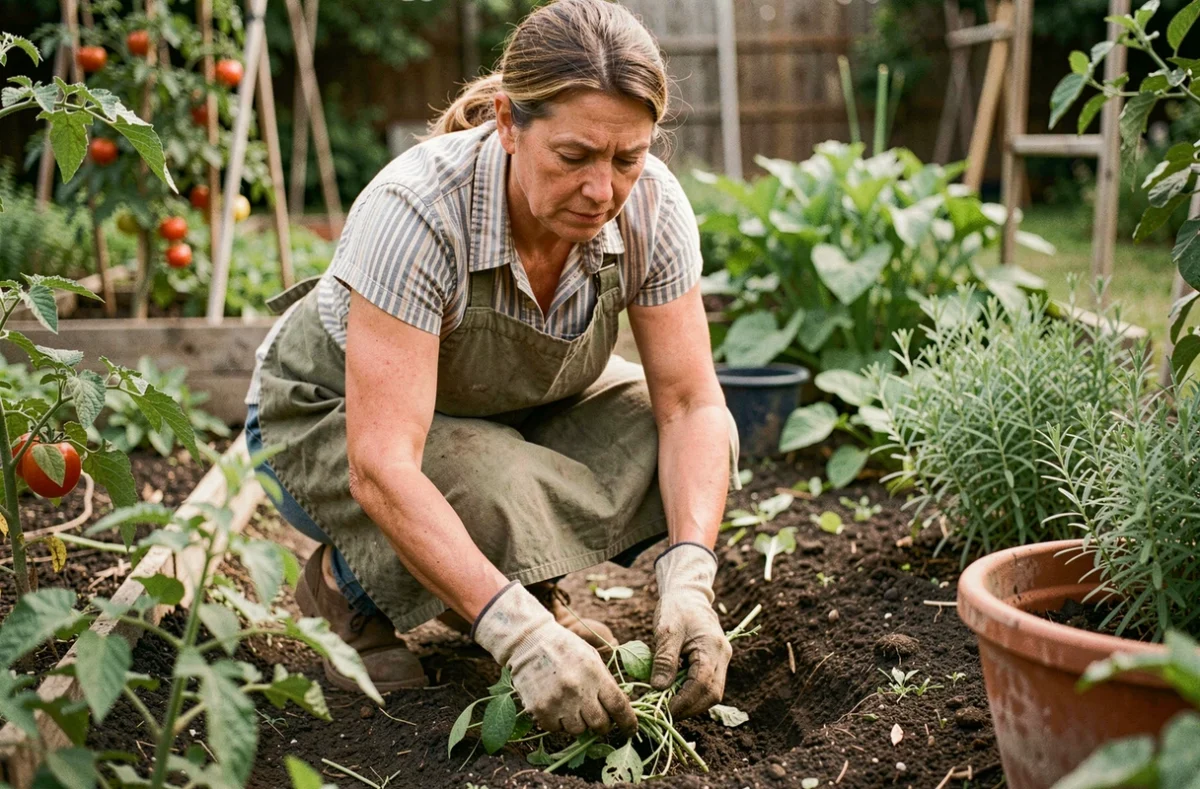
Fighting against weeds in the garden requires choosing a method that is suitable not only for the area concerned but also for the type of weed. A dandelion with a taproot is not treated the same way as creeping speedwell. The available techniques (manual, thermal, preventive) have different effectiveness depending on the root depth and the regrowth capacity of the targeted plant.
Comparative effectiveness of weeding methods according to the type of weed
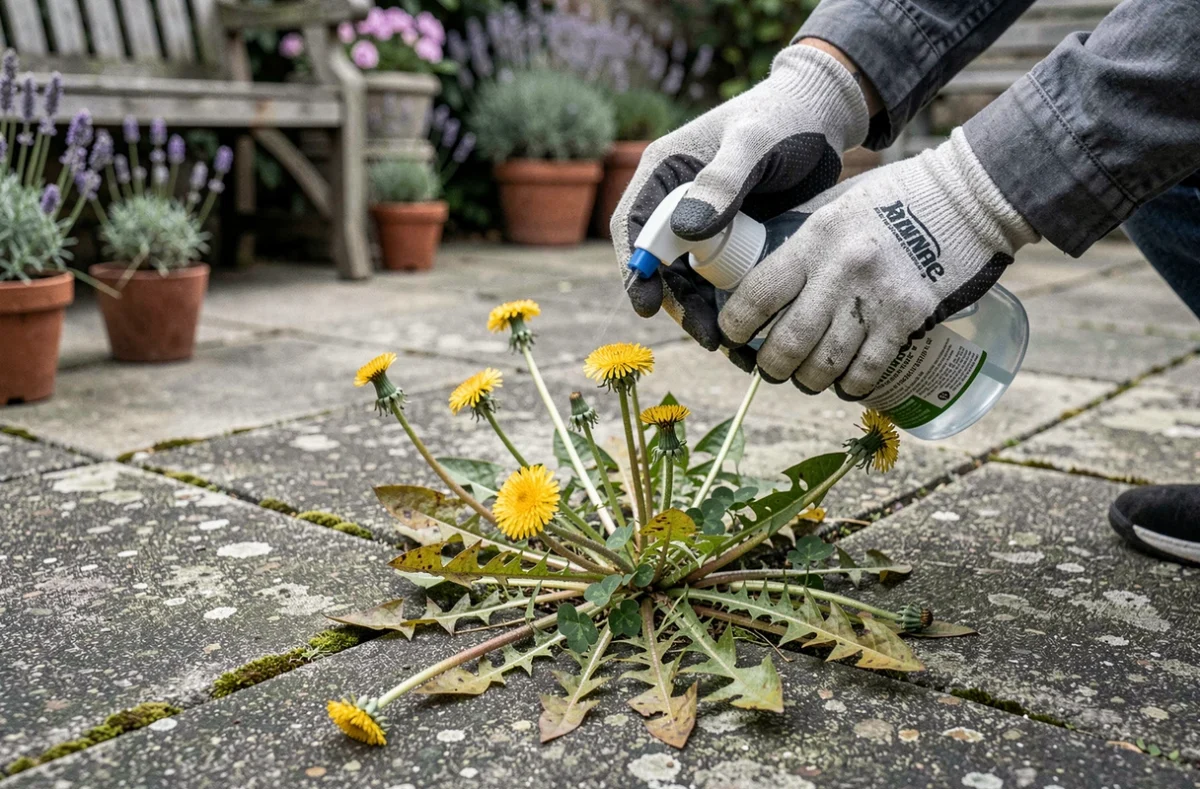
Most guides present weeding techniques as interchangeable. They are not. A contact treatment like pelargonic acid burns the visible foliage, but does not destroy the roots of deep perennials. The visual result is immediate, so is the regrowth.
| Method | Annuals (speedwell, starwort) | Deep-rooted perennials (dandelion, thistle) | Creeping grasses (couch grass) |
|---|---|---|---|
| Manual pulling / hoeing | Very effective | Effective if entire root is extracted | Poorly effective (fragmented rhizomes regrow) |
| Thermal weeding | Very effective | Temporary effect (intact root) | Temporary effect |
| Thick organic mulch | Effective prevention | Slows down but does not prevent emergence | Slows down progression |
| Pelargonic acid (biocontrol) | Effective | Surface effect only | Surface effect only |
| Woven mulch fabric | Very effective prevention | Effective prevention | May be pierced over time |
This table highlights a marked gap: deep-rooted perennials and creeping grasses resist most surface treatments. For these plants, only complete root removal yields a lasting result.
To delve deeper into the mechanical approaches suitable for each situation, Les Défricheurs’ garden solutions detail several complementary techniques.
Manual weeding and suitable tools: what really changes the result
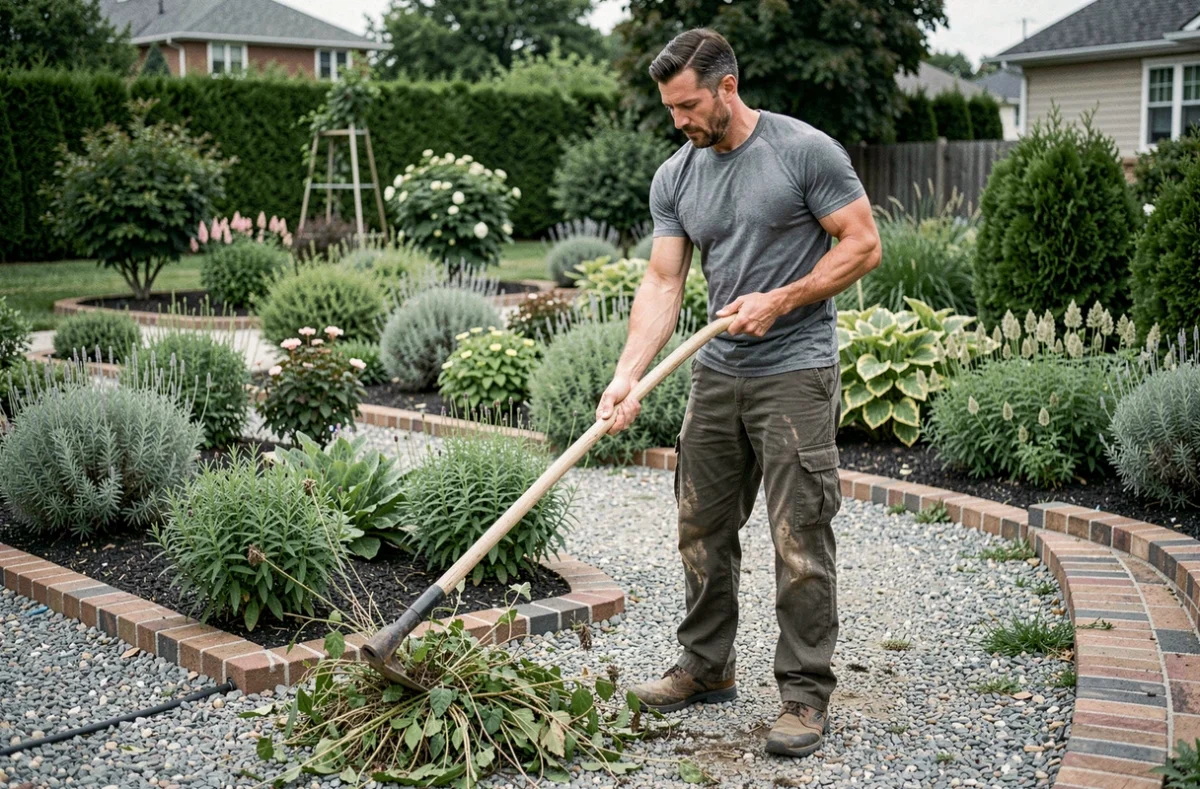
Hand pulling remains the most reliable technique in the vegetable garden and flower beds. The difficulty lies less in the action than in the timing and the tool used.
Working on moist soil
Wet soil after rain releases roots much more easily than dry, compacted soil. The difference is clear with taproot weeds: in dry soil, the root breaks, and the remaining fragment regrows in a few weeks.
Choosing the tool according to root depth
- The hoe or weeding fork is suitable for shallow annuals and for hoeing between rows of vegetables. They cut the plant just below the soil surface.
- The weeding knife (or root puller) allows for the extraction of entire taproots, especially those of dandelions or plantains, without disturbing the surrounding soil.
- The broadfork, used in larger areas, loosens the soil deeply and facilitates the extraction of couch grass rhizomes without fragmenting them.
Fragmenting a couch grass rhizome is equivalent to multiplying it. Each piece left in the ground produces a new shoot. With this grass, it is better to loosen the soil widely and remove the fragments one by one than to hoe the surface.
Mulching in the garden: thickness and materials make the difference
Mulching limits the germination of weeds by depriving seeds of light. Its effectiveness depends on two concrete parameters: the thickness of the layer and the nature of the material.
An organic mulch (straw, branch chippings, dead leaves, buckwheat husks) must reach a sufficient thickness to block light. If too thin, it slows down emergence without preventing it. An effective organic mulch covers the soil with at least seven to ten centimeters.
Mineral mulches (slate, pumice, gravel) last longer and are suitable for paths or the bases of evergreen shrubs. They do not enrich the soil as they decompose, making them less suitable for vegetable gardens.
Mulch fabric: woven or non-woven
Woven fabrics allow water and air to pass while blocking light. They are useful for hedge plantings or slopes. Non-woven fabrics, thinner, degrade faster and can be pierced by vigorous perennials. In both cases, the fabric does not replace initial weeding: laying fabric on soil already infested with couch grass only delays the problem.
Regulations on herbicides for individuals in France
Since January 1, 2019, individuals can no longer purchase or use synthetic phytopharmaceutical products in their gardens. Since July 1, 2022, this ban also extends to professionals working in private residential properties, except for certain specific categories.
The products still allowed are limited to biocontrol products, low-risk products, and those usable in organic farming. Pelargonic acid falls into the latter category. Concentrated white vinegar or bleach, sometimes recommended online, do not have market authorization as herbicides: their use as herbicides is not legal, regardless of their natural origin.
Checking the label and the product’s authorization number remains the only reliable way to ensure compliance. The natural origin of a substance is not sufficient to make it authorized.
Therefore, the choice of weeding method relies on two verifiable criteria: the type of weed present in the garden and the legal framework of the product considered. A well-executed pulling on moist soil, complemented by a thick mulch suitable for the area, covers most situations without resorting to any products.