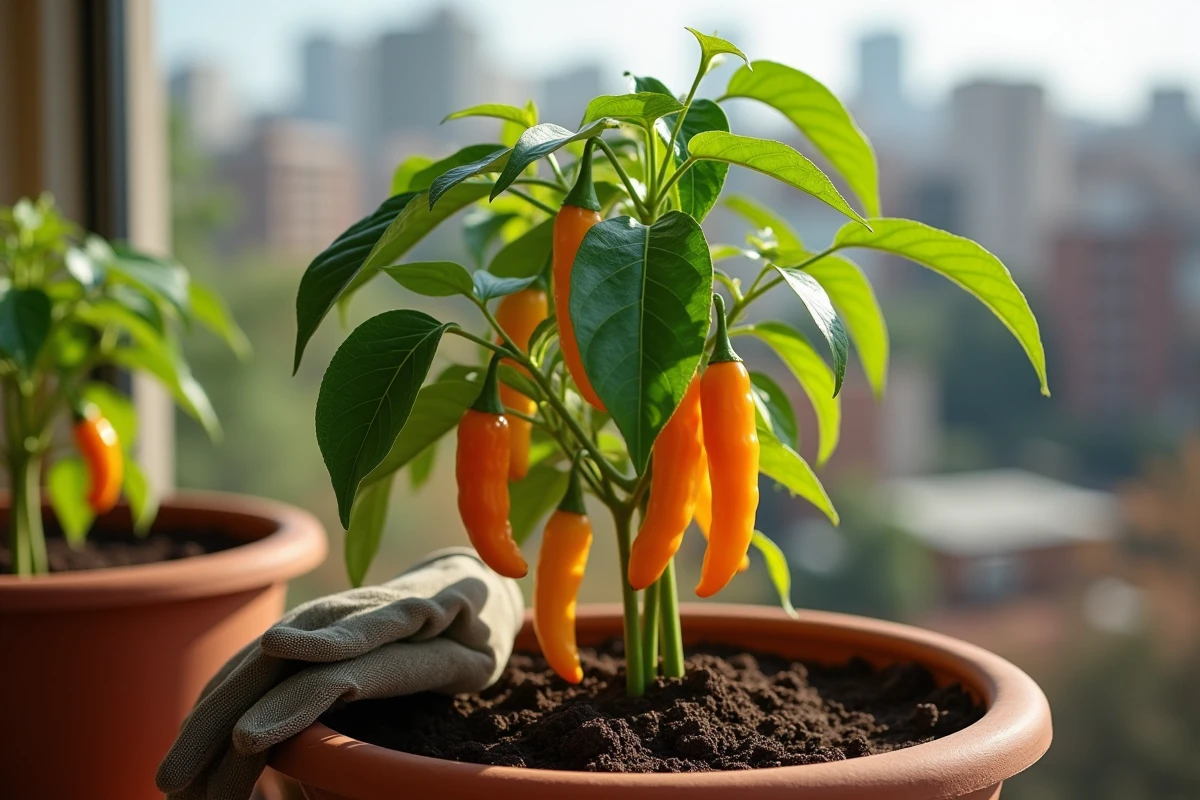
The aji amarillo belongs to the species Capsicum baccatum, whose growing cycle far exceeds that of the Capsicum annuum commonly found at most markets. This botanical characteristic changes the game for those wanting to cultivate this Peruvian pepper in a temperate climate: the available outdoor growing season rarely suffices to produce ripe fruits without technical adaptation. Understanding these constraints of time and heat allows for calibrating each step, from sowing to harvesting.
Capsicum baccatum vs. annuum peppers: comparative growing cycle and requirements
Most pepper cultivation guides generalize their advice across all species. The aji amarillo does not respond to the same parameters as a jalapeño or a habanero. The table below summarizes the documented differences.
| Criterion | Aji amarillo (C. baccatum) | Jalapeño (C. annuum) |
|---|---|---|
| Scoville scale | 30,000 to 50,000 SHU | 2,500 to 8,000 SHU |
| Sowing to harvest duration | Significantly longer | Shorter |
| Cold tolerance | Low (Andean high-altitude origin) | Moderate |
| Natural branching | Abundant, bushy growth | More upright growth |
| Daily light requirement | High (14 to 16 hours during pre-culture) | Standard (12 hours is sufficient) |
The difference in growing cycle is the most determining factor. A jalapeño sown in March produces fruits by July in southern France. The aji amarillo, on the other hand, requires several additional weeks before even flowering. This data necessitates very early sowing, often as early as January or February, exclusively indoors.
As detailed by the site 1 Blog 1 Jour, the success of this cultivation relies on mastering the initial phase, much more than on the care given in the ground.
Pre-culture under LED lighting: why extend the indoor phase of aji amarillo
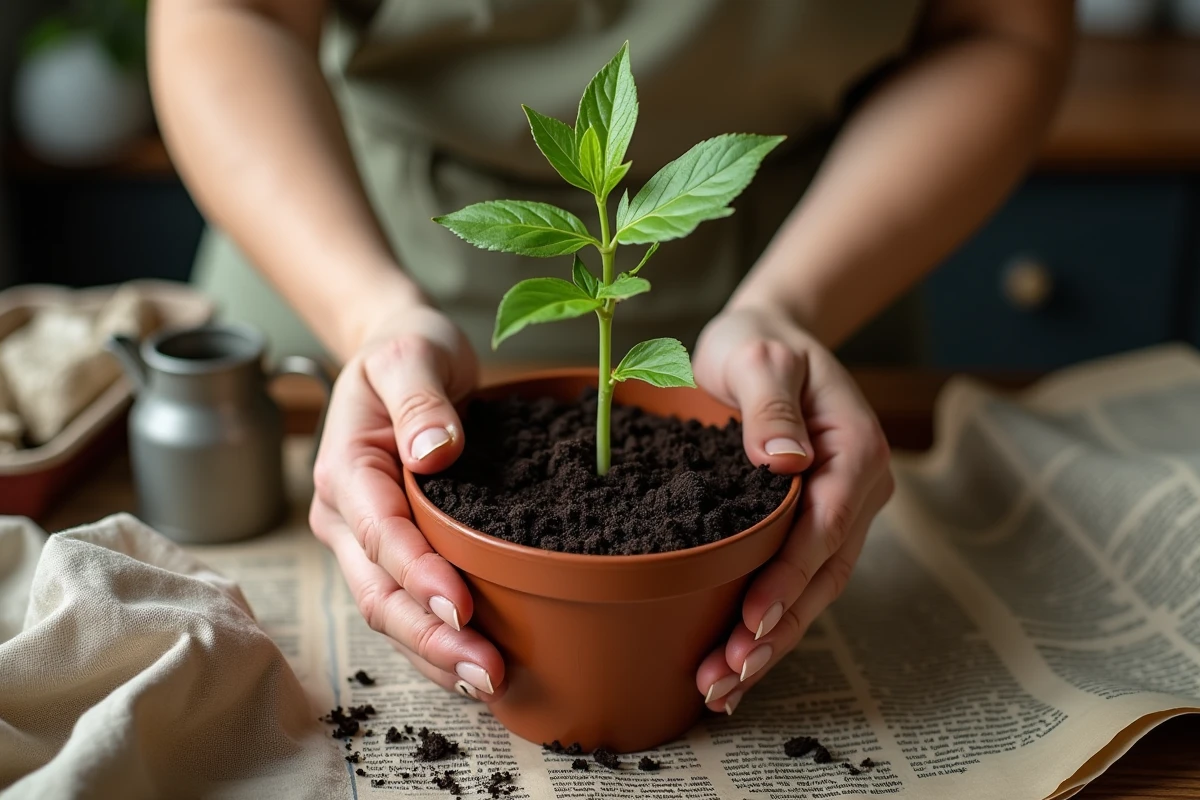
Feedback from specialized growers converges on one point: extending growth under LED until the plant is well-branched significantly increases fruit production in non-tropical climates. This recommendation applies particularly to Capsicum baccatum, whose longer cycle than that of classic annuum makes every week of indoor growth worthwhile.
Lighting parameters and optimal duration
The range of 14 to 16 hours of artificial light per day is documented as the effective range for aji amarillo in pre-culture. Below this, the plants become leggy and branching is delayed. Above this, the gain becomes marginal.
- Position the LED panels about twenty centimeters above the seedlings, then raise them as the plants grow to avoid leaf burn
- Keep the ambient temperature above the comfort threshold for Capsicum baccatum, which does not tolerate cool nights well even indoors
- Do not rush the transition outdoors: wait until the plant has developed several lateral forks, a sign of a root system capable of supporting fruiting
The most common mistake is to take the plants outside as soon as the first mild days of spring arrive. An aji amarillo transplanted too early stagnates for weeks, negating the benefits of early sowing. Patience indoors pays off with additional fruits in the fall.
Pot cultivation of aji amarillo: substrate, watering, and container volume
Capsicum baccatum develops a large root system when given the space. Small containers mechanically limit yield, even with enriched substrate.
Choosing the pot and substrate
A pot of at least twenty liters provides sufficient volume for the roots to explore without becoming saturated. The substrate should combine water retention and rapid drainage: a mix of horticultural soil, perlite, and well-decomposed compost works for this species.
Excess water causes more damage than slight water stress. The aji amarillo tolerates temporarily dry soil, but waterlogged substrate promotes root fungi. Water when the top few centimeters of soil are dry to the touch remains the most reliable method.
Fertilization during fruiting
The flowering and fruit set phase is when the plant consumes the most potassium. A fertilizer too rich in nitrogen at this stage produces abundant foliage at the expense of fruits. Gradually reducing nitrogen in favor of potassium after the first flowers appear directs energy towards pepper production.
Harvesting and transforming into homemade aji amarillo paste
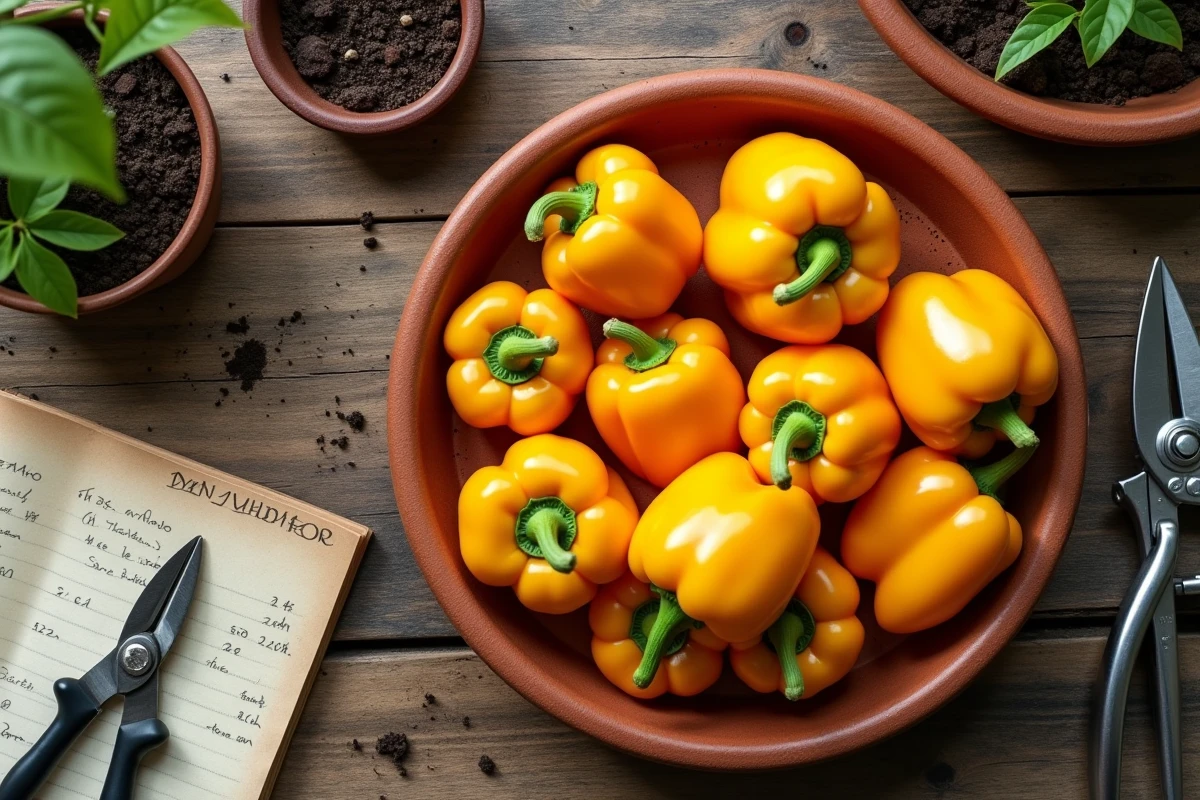
The fruits of the aji amarillo change from green to bright yellow-orange at maturity. Waiting for complete coloration ensures the fruity and slightly tangy flavor profile that distinguishes this pepper from other varieties with comparable heat on the Scoville scale.
The majority of the fruits reach maturity in late summer or early fall in our latitudes. To avoid losing an abundant harvest, transforming into aji amarillo paste remains the most practical and commonly used preservation method in Peruvian cuisine.
- Remove the seeds and white membranes from the peppers to reduce heat while retaining the fruity flavor
- Sauté the peppers for a few minutes in a pan or blanch them briefly, then blend with a drizzle of vegetable oil and a pinch of salt
- Divide the paste into small portions in ice cube trays before freezing, making it easy to dose in recipes
- Use this paste in ceviches, poultry sauces, or marinades, where it adds medium heat and a characteristic aroma that dried spices do not replicate
Artisan producers in France, such as Alélor, are already marketing sauces made from fresh aji amarillo. Growing your own plants provides access to an ingredient whose freshness radically alters the outcome in the kitchen compared to imported industrial pastes.
The aji amarillo requires more anticipation and technical rigor than most peppers grown in Europe. The limiting factor is neither the soil nor the fertilizer, but the available growing time. Compensating for this deficit with early sowing and extended pre-culture under LED transforms a cultivation known to be difficult into a realistic project, even in an apartment.