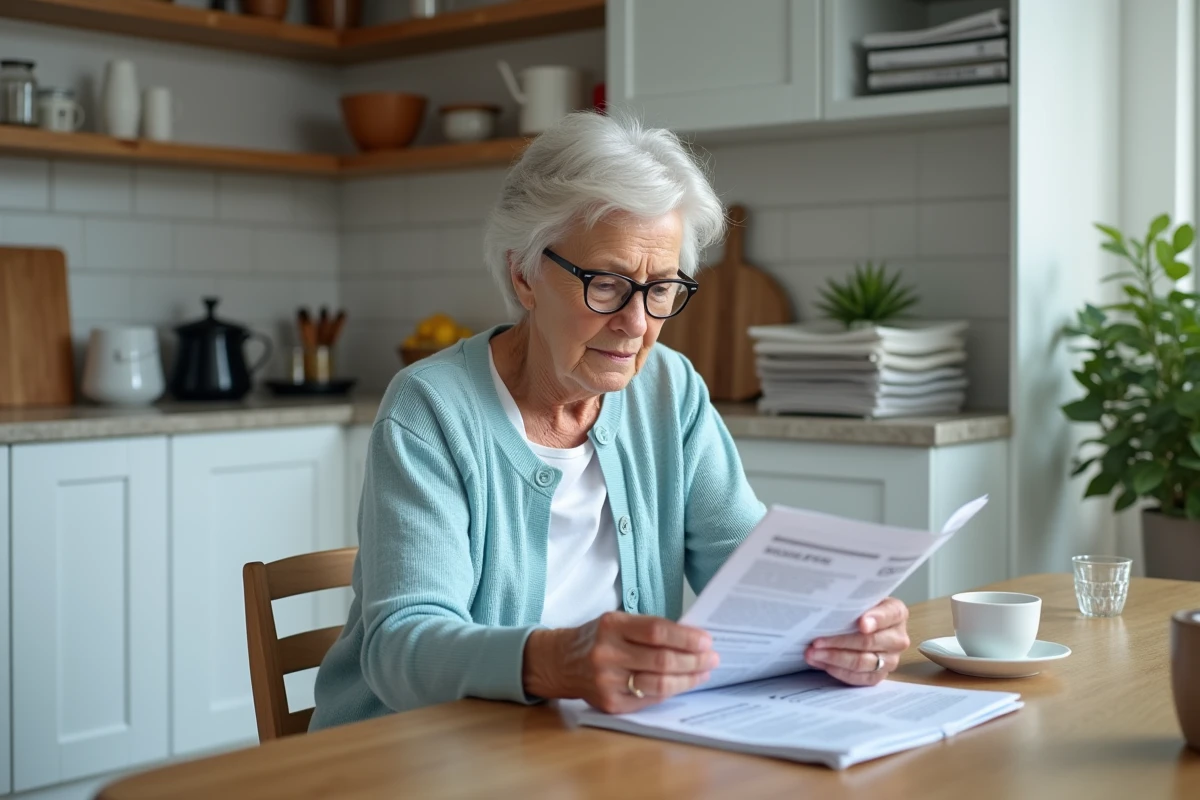
In 2001, French legislation required each department to create a local information point for the elderly and their families. However, on the ground, the reality is not uniform: access to these services varies from region to region. In some cities, one can fill out a request for the Personalized Autonomy Allowance (APA) in just a few clicks, while elsewhere, one still has to push the door of a counter to initiate the process.
Support systems are multiplying, as are the acronyms. Navigating between social rights, home care, and reception facilities can sometimes be a real puzzle. For seniors and their loved ones, understanding who does what, when, remains a daily challenge.
What are the main information and support points for seniors in France?
To find their way, one must first know where to knock on the right door. The Local Information and Coordination Centers (CLIC) form the backbone of this network. Present in many departments, they guide the elderly and their families through administrative procedures, access to aid, and the search for solutions to stay at home. Their role: inform, guide, support, in direct connection with the departmental council and local social actors.
Another support point: the Municipal Social Action Centers (CCAS). Attached to town halls, they provide daily support: file preparation, information on rights, and assistance with everyday tasks. In less equipped areas, Maisons France Services centralize several administrations to simplify seniors’ lives.
For those who wish to verify information or prepare a procedure, information on Info Seniors offers a reliable compass. The site provides maps to locate services, practical advice, and clear explanations of accessible rights and services.
Here are the essential points of contact to know for orientation:
- Local information points: personalized guidance and advice
- CCAS: administrative and social support
- Maisons France Services: simplified access to procedures
Faced with the diversity of services, it is not always easy to find one’s way. Understanding each acronym, identifying the right structure, requesting the right support: all of this sometimes requires external help. Navigating the jungle of services is already a step towards finding solutions tailored to each situation.
Health, retirement, rights: what you need to know to live well as a senior
Access to care and adapted health pathways
For many seniors, obtaining appropriate care remains a significant challenge. While social security forms the basis of health protection, navigating the procedures, finding a primary care physician, or benefiting from specific follow-up can prove difficult. The systems for autonomy and the organization of geriatric pathways are evolving to respond to loss of autonomy. Preventive consultations, coordination among professionals, consideration of life projects: these are all tools to anticipate needs, prevent isolation, and react quickly in case of problems.
Rights and simplified procedures
Social rights are not limited to retirement. Depending on their situation, each elderly person can request various financial aids. The Personalized Autonomy Allowance (APA), provided by the departmental council, often serves as a lever to live better at home despite the loss of autonomy. Online procedures open up new possibilities: file preparation, tracking, aid requests, everything can now be done from home, provided one has support if needed.
Several major systems can be distinguished:
- Social security: health coverage, reimbursements, specific support
- APA: financial support for autonomy
- Online procedures: clear information, accelerated processes
Caution remains essential. At town halls or in Maisons France Services, specialized welcome points allow individuals to secure their procedures, assert sometimes forgotten rights, and obtain informed advice for each particular situation.

Home care, aids, and procedures: a practical guide for your daily needs
Concrete solutions to stay at home
For many seniors today, staying at home is non-negotiable. Preserving autonomy, maintaining familiar surroundings, continuing to live in a known environment: the wish is clear. But to achieve this, adaptations are sometimes necessary. Home care then takes on its full dimension: housekeeping, meal delivery, assistance with bathing, all these home services are coordinated by the departmental council and rely on a strong local network.
The Personalized Autonomy Allowance (APA) remains a pillar. This aid from the departmental council helps finance home modifications, reduce the cost of daily assistance, or ensure a return home after hospitalization. To benefit from it, one must submit a file to the relevant services or rely on a local information point for personalized support.
Here are the main solutions that facilitate daily life at home:
- Housing adaptation: installation of grab bars, removal of obstacles, digital solutions for safety.
- Daily support: help with meal preparation, administrative assistance, support for online procedures.
- Return home after hospitalization: coordination of care, temporary or permanent adaptation of the living environment.
To successfully carry out these procedures, one must rely on the social action services of their municipality, request assistance from the Local Information and Coordination Centers (CLIC), or visit a France Services welcome point. Anticipating, gathering information, preparing one’s APA file: this is the key to ensuring solid, tailored, and sustainable support.
Throughout the procedures, support takes on a new dimension. One does not become an expert overnight, but a step aside, a timely piece of advice, and access to the right services suddenly becomes clearer. The path may not be straightforward, but it can become more navigable with the right contacts.