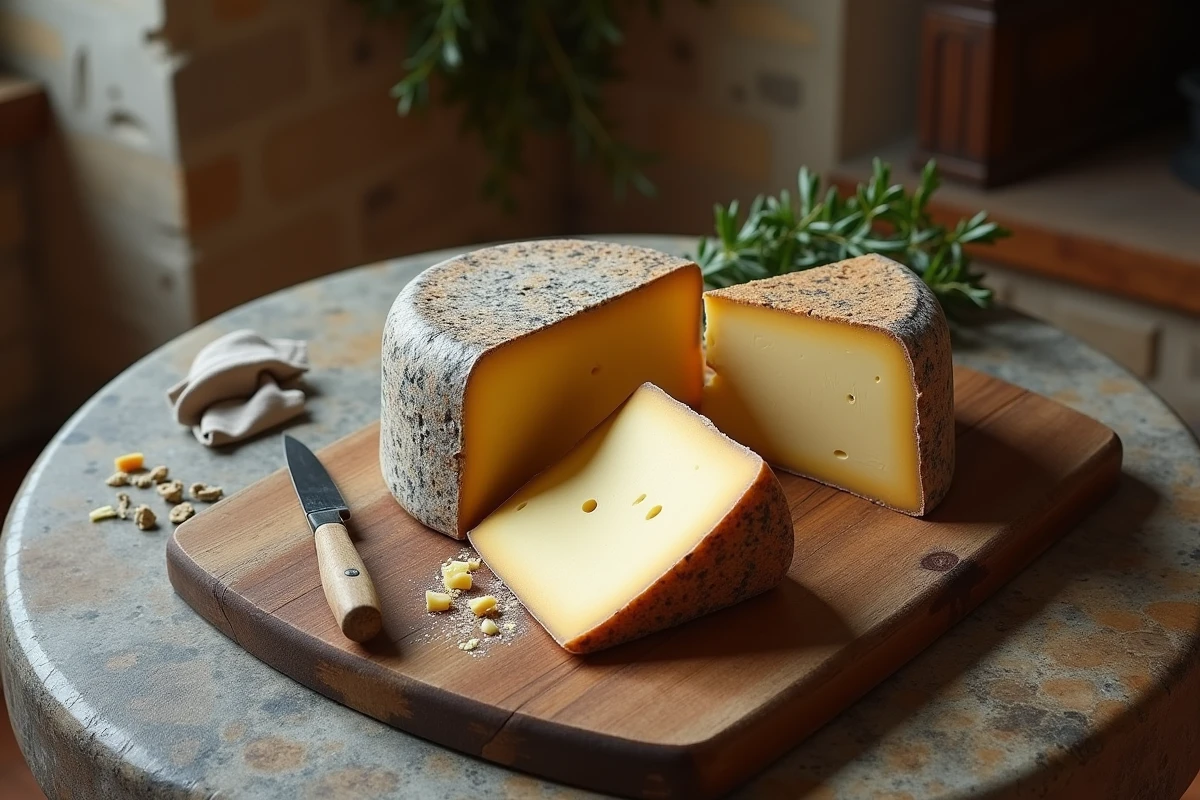
Cantal and Comté share a technological family, that of uncooked pressed cheeses for the former and cooked pressed cheeses for the latter, but their AOP specifications diverge on a point that most comparisons overlook: the thermal treatment of milk.
Raw milk vs. thermized milk: the regulatory divergence between Cantal and Comté
The AOP Comté mandates raw milk that is not thermized, heated to a maximum of 40 °C during production. This constraint, maintained by the INAO and the CIGC, locks in the native microbial flora of the milk and conditions the aromatic complexity of the aged cheese.
The AOP Cantal, on the other hand, allows both raw milk and pasteurized or thermized milk. In industrial dairy production, the use of thermized milk smooths out flavor profiles. Only farm-produced Cantal, made from raw milk on the farm, retains a typicity comparable to that of Comté in terms of organoleptic variability.
We observe a direct consequence on the shelves: a Comté exhibits superior aromatic consistency from one batch to another, while the range of Cantal varies from very mild (pasteurized milk version) to very pronounced (farm version with raw milk). To delve deeper into the differences between Cantal and Comté, the question of thermal treatment of milk remains the primary criterion to master before addressing aging or geographical area.
Aging of Comté and Cantal: durations, cellars, and aromatic profiles
The cheese-making technology radically separates these two cheeses from the pressing stage. Comté, a cooked pressed cheese, undergoes heating of the curd which expels more whey and allows for long aging without the risk of excessive proteolytic degradation. Cantal, an uncooked pressed cheese, retains more moisture and evolves faster in the cellar.
Minimum durations and actual practices
The specifications for Comté set a minimum aging period of four months. In practice, an increasing share of production exceeds twelve months, even reaching eighteen or twenty-four months, according to data from the CIGC published in its recent activity reports. These long durations develop notes of dried fruits, roasted hazelnuts, and sometimes a slight spiciness on the palate.
Cantal comes in three regulatory stages:
- Young Cantal, aged between one and two months, with a soft paste, a mild dairy flavor, and a barely formed thin rind.
- Between Cantal, aged between two and eight months, where the paste firms up and cave and cooked butter aromas appear.
- Old Cantal, aged beyond eight months, with a thick rind and powerful flavor, sometimes spicy, with earthy notes.
A twelve-month Comté and an eight-month old Cantal do not play in the same league. The former remains round, complex, with dried fruit notes. The latter leans towards bitterness and power, with a crumblier texture.
Aging location and surface flora
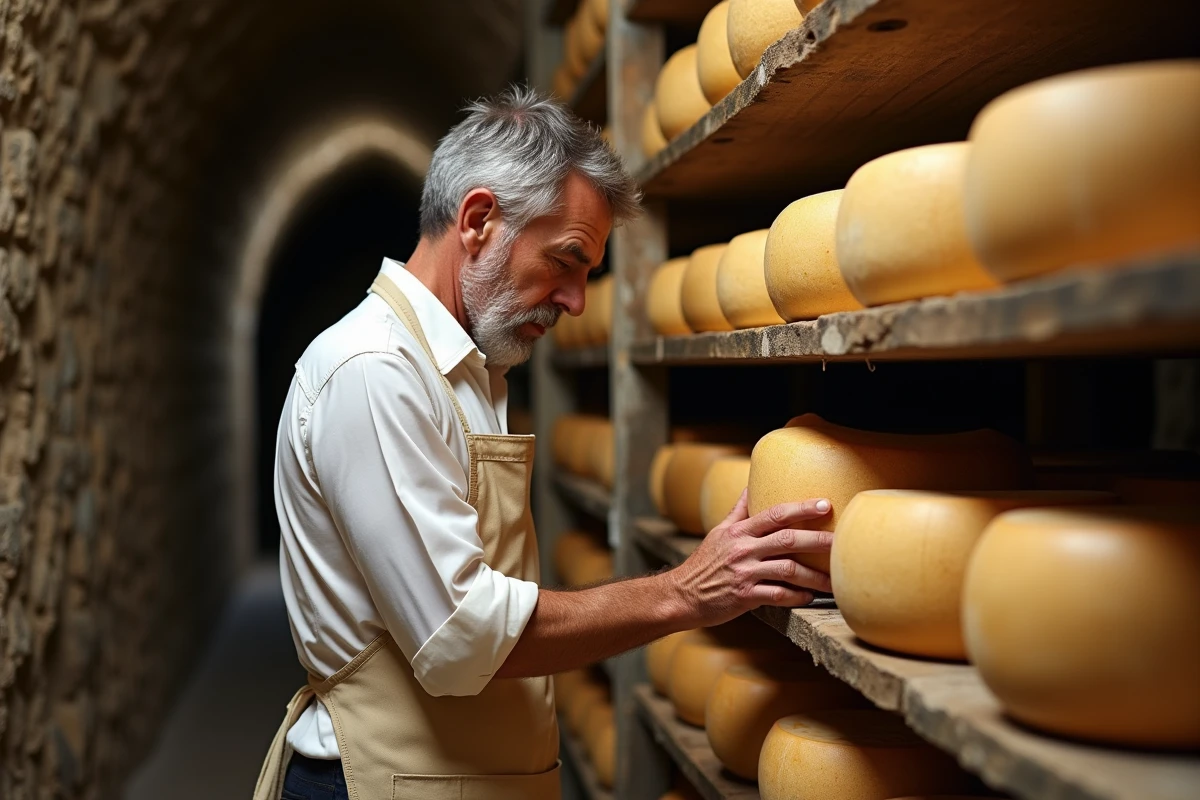
Comté ages in specialized cellars (the “forts” of Jura being the most renowned) where the surface flora, particularly the morge, is maintained through regular brushing. Cantal matures in natural or adapted cellars in the Massif Central, where humidity and temperature produce a different rind, often drier and bumpy.
AOP areas and dairy breeds: what distinguishes one terroir from another
Comté comes exclusively from the Jura massif, covering an area that includes Doubs, Jura, and part of Ain. Only the Montbéliarde breed (or French Simmental) is authorized by the specifications, with a limited number of cows per hectare of forage area.
Cantal takes its name from the department of the same name, but its AOP area extends to parts of neighboring departments in the Massif Central. The breeds are not restricted in the same way: Salers, Aubrac, and other local or mixed breeds can contribute to the milk collection.
This difference in breed directly influences the milk. The Montbéliarde produces milk rich in kappa casein B, favorable for a firm curd and high cheese yield. The breeds from the Massif Central provide milk that is sometimes fattier, with variable protein levels depending on the season and feeding method, which enhances the seasonal variability of farm-produced Cantal.
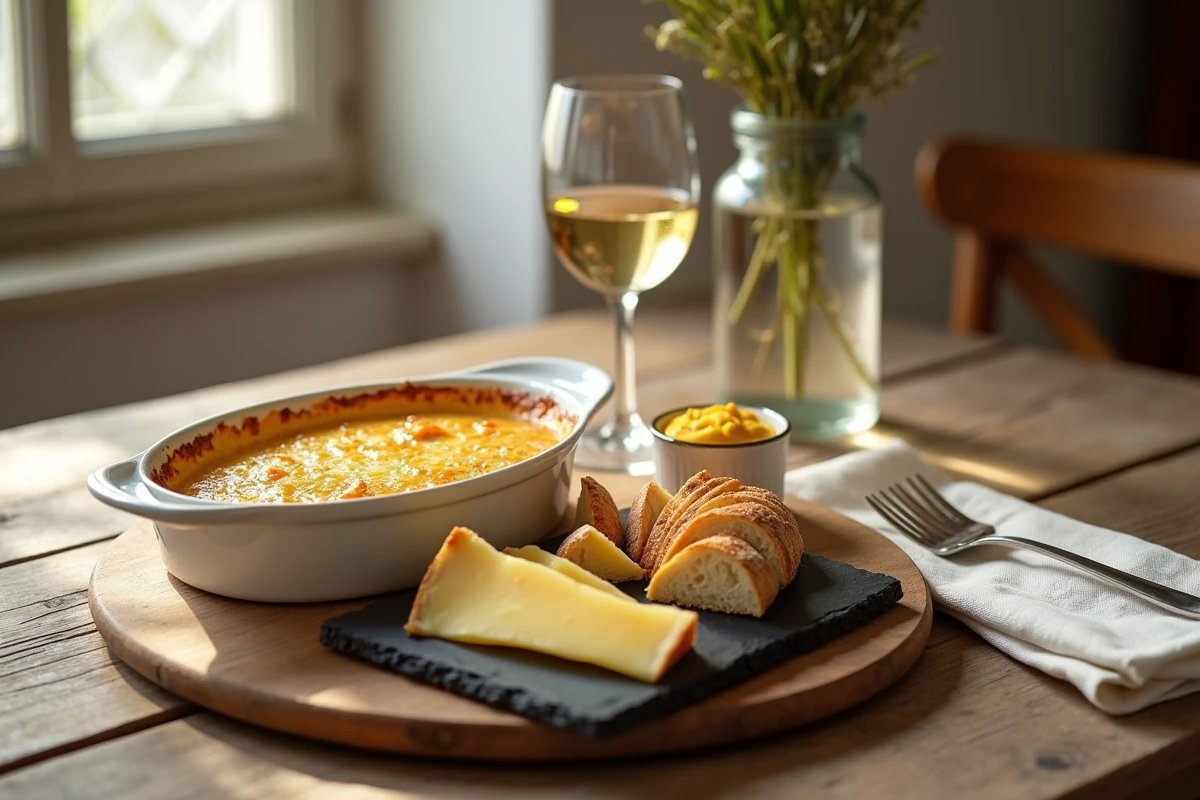
Culinary uses and on a platter: choosing between Cantal and Comté
In cooking, young Cantal melts easily and provides a subtle creaminess, making it a cheese of choice for gratins, truffade, or aligot (where it sometimes replaces fresh tome). Old Cantal, drier, is grated and used sparingly to enhance a soup or salad.
Comté withstands heat without excessive melting thanks to its denser cooked paste. We recommend it for Comtoise fondues, gratin crusts, and quiches where a persistent nutty flavor is sought without excess fat on the surface.
On a platter, the pairing logic changes:
- A Comté over twelve months pairs well with a yellow wine from Jura or a Savagnin, whose controlled oxidation echoes the nutty aromas of the cheese.
- A Between Cantal goes well with a light red wine such as Saint-Pourçain or Côtes-d’Auvergne, which respects its rusticity without overpowering it.
- An Old Cantal stands up to a more robust wine or even a brut cider to cut the bitterness with acidity.
Comté gains complexity over time, while Cantal gains power. These are two distinct aging trajectories, and the choice depends on the desired flavor profile, not a hierarchy of quality. A well-aged farm-produced Cantal made from raw milk has nothing to envy from a well-aged Comté, provided one knows what to expect from their cheese.