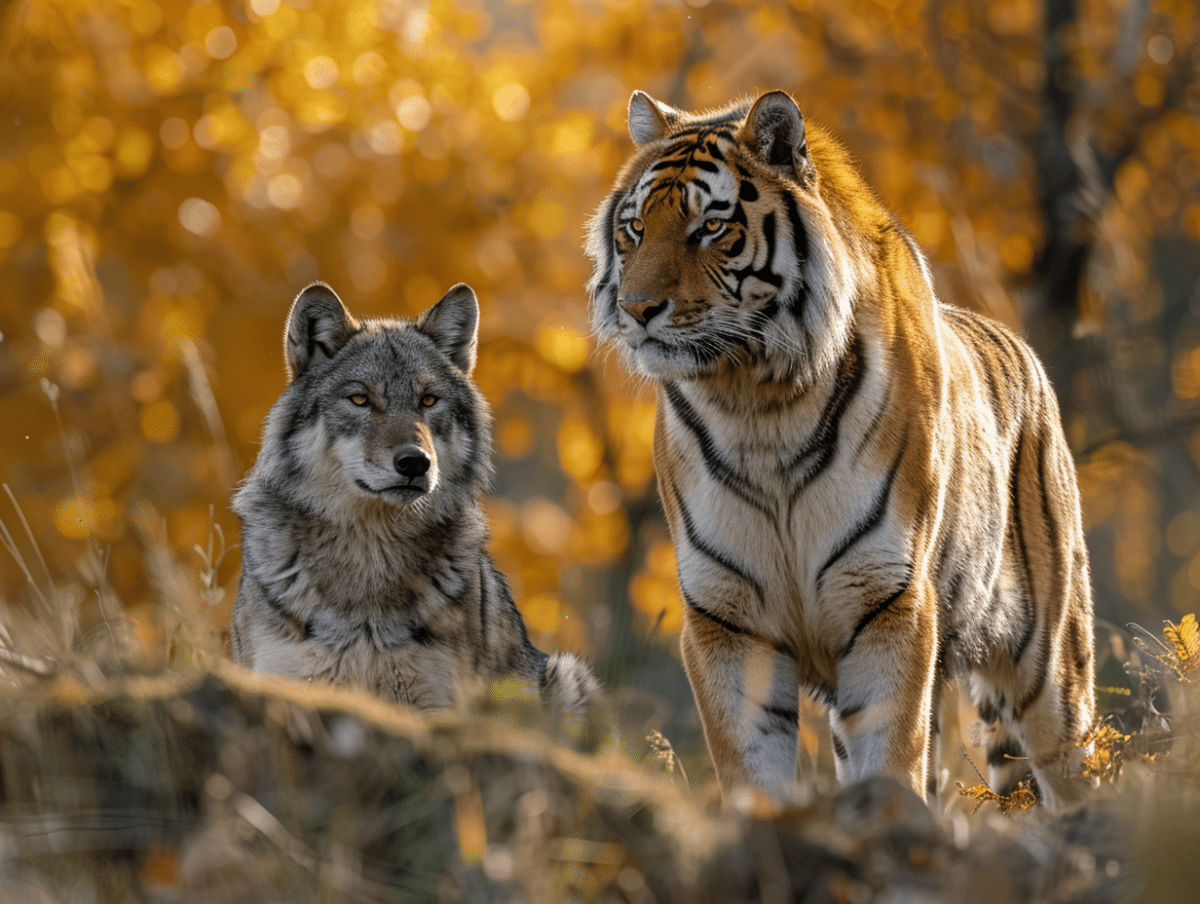
In the vastness of terrestrial ecosystems, large carnivores embody the power and mystery of the wild. These creatures, often at the top of the food chain, play a fundamental role in ecological balance. African lions, polar bears from the Arctic, and Siberian tigers, each of these giants possesses unique characteristics adapted to their environment. Comparing their proportions reveals not only their biological diversity but also how they have perfected themselves to become effective hunters. Exploring their world is to understand how size and strength are major assets for their survival.
The stakes of preserving large carnivores
Faced with conflicts with human activities, large carnivores are at the heart of a debate that goes beyond the simple conservation of iconic species. The preservation of large carnivores raises questions regarding the coexistence between humans and these predators. These animals, often perceived as a threat, are nevertheless essential to biodiversity and the health of the ecosystems in which they evolve, regulating prey populations and contributing to natural balance.
The return of the brown bear (Ursus arctos), the Eurasian lynx (Lynx lynx), the gray wolf (Canis lupus), and the wolverine (Gulo gulo) in Europe is a victory for conservation, but it highlights the fragility of the successes achieved. These species, after centuries of decline, face new challenges to establish themselves sustainably in territories that are now largely altered by human expansion.
The presence of these large carnivores often leads to conflicts with human activities, whether in agriculture or urban development. Their habitats are fragmented, their migratory corridors obstructed, and their food sources altered by human presence. This forced coexistence requires adaptive management, involving strict regulation of hunting, measures to protect livestock, and educational efforts with local populations.
However, the situation is not without hope. Conservation and research efforts are helping to better understand and thus better protect these majestic felines and other large predators. By being at the top of the food chain, these carnivores serve as valuable indicators of environmental health. Their preservation is therefore fundamental, not only for their survival but also for maintaining the diversity of species with which they coexist and, ultimately, for the balance of entire ecosystems.
The challenges of studying and comparing large carnivore populations
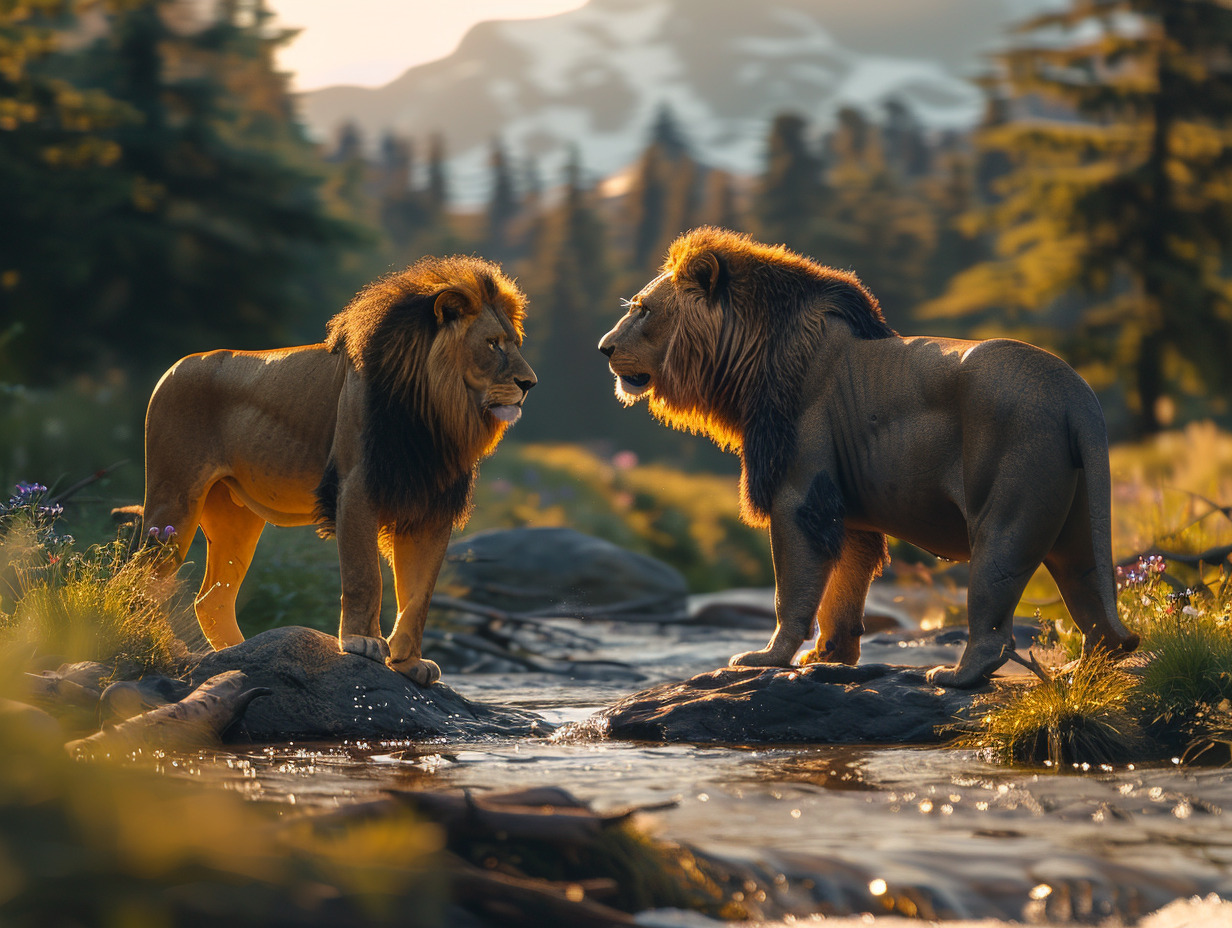
The work of Pierre Dupont, Cyril Milleret, and Olivier Gimenez, researchers respectively affiliated with the University of Ås in Norway and the Functional and Evolutionary Ecology Center in Montpellier, focuses on developing robust methods to assess large carnivore populations. The comparison of proportions of these populations requires rigorous scientific methodology, which must address the inherent limitations of observing these often elusive species. Hence the need to develop advanced statistical models to estimate the probability of evasion from detections.
The implementation of genetic analysis techniques is crucial for refining these estimates. Researchers rely on the collection and analysis of DNA samples, a long-term endeavor that benefits from close cooperation between Swedish and Norwegian authorities. The result of this collaboration, the database rovbase.no, proves to be a valuable tool, providing a considerable amount of genetic data essential for monitoring large carnivore populations.
The challenge of these studies lies in establishing an accurate population estimate of carnivores, particularly bears, wolves, and wolverines, within their geographical range. The population estimate conducted during the winter of 2018/2019 illustrates the recolonization of species in Scandinavia, with numbers ranging from 2,636 to 2,877 for bears, from 335 to 400 for wolves, and from 985 to 1,088 for wolverines. These data reflect not only population dynamics but also the challenges of coexistence and habitat management.
Scientists like Dupont, Milleret, and Gimenez play a fundamental role in developing population density maps. Their work, which extends well beyond national borders, requires international coordination and knowledge sharing. Comparing the proportions of different large carnivore populations, using advanced statistical methods and genetic analyses, remains a significant challenge. However, this challenge is essential for understanding ecological dynamics and implementing effective conservation strategies.